

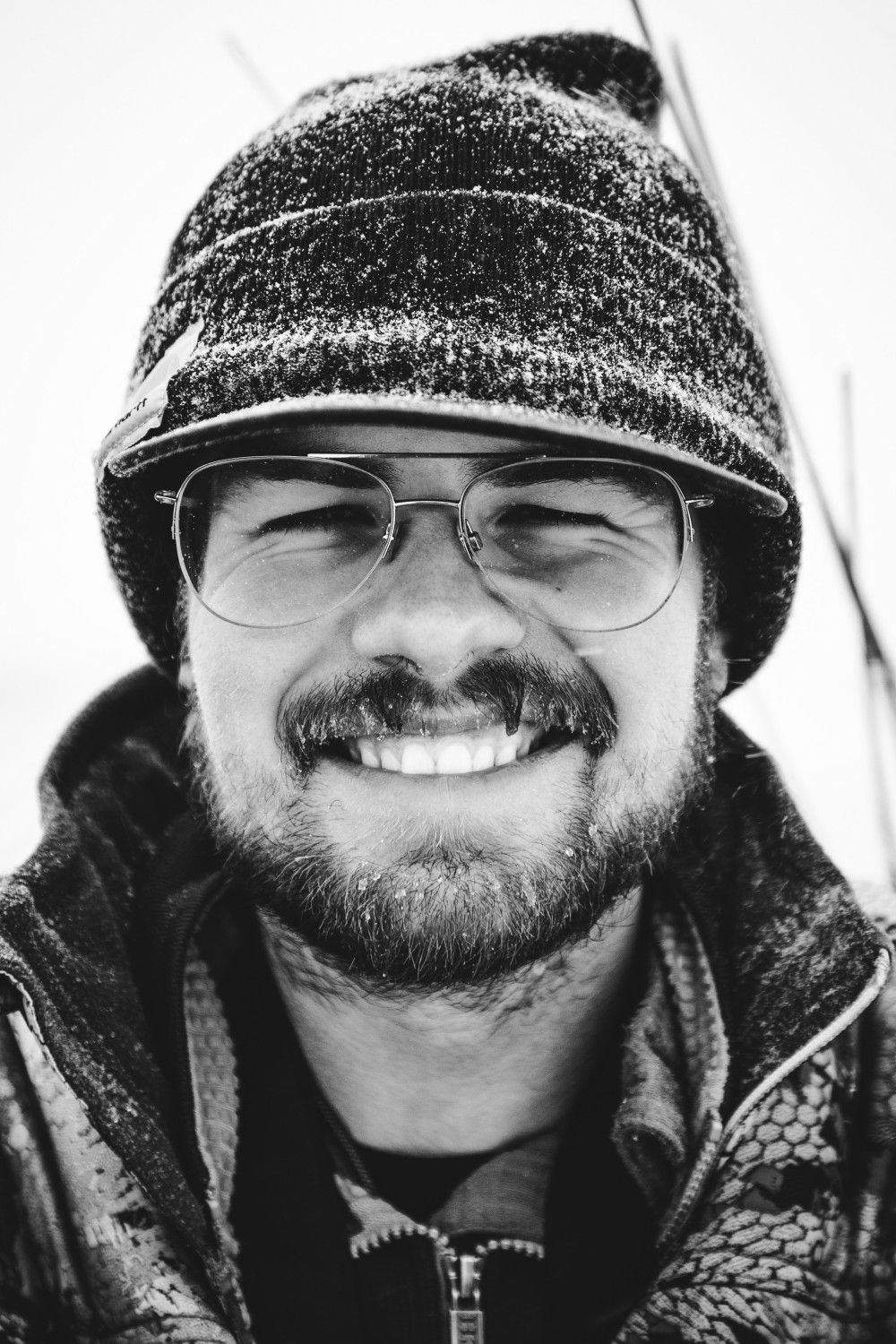

In this exclusive Behind the Brand feature, we had the opportunity to sit down with Aves Hunting Co-Founder Rhett Strickland for an in-depth look at their up-and-coming technical apparel brand. From its inception in 2017, Aves Hunting has always had one goal in mind: to create technical apparel and gear for hunters that solve problems. With a whole host of waterfowl-specific gear from outer layers to bags and gun cases, Aves Co-Founder Rhett Strickland has his sights set on creating solutions to existing problems in the waterfowl gear we see today and pushing that mindset further into other bird-hunting pursuits. Check out the full interview below to learn more about Aves Hunting, Rhett Strickland, and what this pioneering brand is all about.

Split Reed: Who are you and what do you do?
Strickland: “My name is Rhett Strickland, and I grew up here in Pike County, Georgia, and I’m the Co-Founder of Aves Hunting.”
Split Reed: How did the idea for Aves Hunting come to the business it is today?
Strickland: “I used to wear hunting apparel that was great for its intended purpose, but it wasn’t specifically designed for waterfowl hunting. It wasn’t the right colors, and the pocket configuration wasn’t great for my use, but it was good gear that I really liked. I had become friends with the founder of that brand and initially tried pushing him to come out with waterfowl-specific apparel. After asking him repeatedly to consider making waterfowl hunting gear, one day he finally said, why don’t you guys do it? At the time, I didn’t have experience in starting a business like that, but eventually, we made the right connections for what we wanted to see fabric and gear-wise. We ended up collaborating with Toray, an apparel/fabric company, and that was the first big step for us.

We knew going into this that we had to be different from everybody else. We weren’t going to just produce the same kinds of gear and apparel that other waterfowl companies were making and just have our own twist on it, like what a lot of companies have done. They’re not innovating anymore, they’re not using any incredible fabrics, they’re just branded. As soon as they come out with something, they put their brand on there, and they know people are gonna buy it. So we decided, one, we need a different fabric than anybody else in the waterfowl industry. And then, two, we need to focus on good designs. Our initial course of action from there was to find existing problems and create solutions to them.”
Split Reed: Growing up, did you have a background in waterfowl hunting?

Strickland: “I grew up really just deer hunting, rabbit hunting, and dove hunting with my dad and brothers. That’s all our dad ever did. Nobody around us ever really waterfowl hunted much, so I started when I was probably 16, and it was kind of by accident. We were out scouting for deer and came across a little beaver swamp. As soon as we walked in there, we flushed about 50 or 60 wood ducks. They just went everywhere. We’re like, holy crap, that looks like a lot of fun. Let’s do it. So we went out and bought waders and decoys and everything we needed to start duck hunting. It felt like almost every time we went to that hole, everybody there was limited. As kids, we were thinking, this is awesome, it’s like this ‘every time’, which, of course, is not how duck hunting actually is. But having one good hunt like that, especially on your first hunt, you could go back 10 more times and have it suck, but you’re going to keep going back because of that one hunt. It is always possible that everything works out, the ducks work out, the weather’s right, and that’s what kept us going. After that, we had the itch for duck hunting, so we started traveling to hunt. We started going to Alabama, Mississippi, Arkansas, all over. In Georgia, 85-90% of the ducks, even today, that we kill are all wood ducks. We’ll get mallards, but it’s 90% wood ducks where we are. So anytime we wanted to kill something else, we’d travel.”
Split Reed: What would you say Aves’ mission is?
Strickland: “Our overall mission is to create solutions to problems, use cutting-edge fabrics at a better price, and focus on really, really good designs. We want to help you as a hunter, so you don’t have to worry about your gear. You can just worry about the hunt.”
Split Reed: What’s behind the name ‘Aves’?

Strickland: “I went through, you know, 50 different names and 200 different logos, trying to figure out what I wanted to do early on. I had a lot of names that were waterfowl specific, and one of them was actually ‘double reed.’ The thing that got me away from doing a waterfowl-specific name is, if you look at other companies in the outdoor space, there are waterfowl brands that now own/run brands in other outdoor pursuits. For instance, you might have a waterfowl company that also has a separate brand in turkey and whitetail hunting. They have to promote three different companies, and that’s just a lot more time and energy into marketing and things like that. One of the goals for Aves is to expand further into other bird hunting pursuits under our one brand. The word Aves is a taxonomic class that includes all birds, which is why I chose it, so when we expand into turkey & upland hunting gear, it’ll all be under one roof. When you visit our website, you will get everything you need for bird hunting gear. That’s part of our end goal, to design the best possible products for bird hunters in general.”
Split Reed: What was the inspiration behind the Aves Refuge Camo pattern?
Strickland: “It’s kind of a funny story because I was up in Ohio deer hunting with a buddy of mine. One night, we went out to a little bar to grab something to eat. I was already in the process with Aves at this point, and I was showing him different designs that I had created for our own camo pattern. With our fabric company, Toray, the way they do their water press to create the pattern on gear, we were limited to six colors for a pattern. In my mind, I knew that even if I wanted to license another camo brand, I probably couldn’t. If you look at a lot of camo brands, it might look like it’s six or seven colors. But when you dissect it, it might end up being 30-40 different pantone colors. It’s easy to get these patterns on fabric if you heat press it, but the problem with heat pressing camo onto fabric is you’re heating that fabric up, so you’re damaging the fabric. Also, a lot of times, depending on the fabric, it’ll give you shine. Well, we definitely don’t want that as a waterfowl hunter. So I knew we were going to have to design our own camo.

I was talking to my buddy, Buck, about different designs, but I wasn’t sold on any of them yet. Buck had never duck hunted, but he said, isn’t a hen mallard really camouflaged? I was like, yeah, he’s said, so you couldn’t do anything with their feathers? I was just like, holy shit, absolutely we can. I actually wrote that down on a napkin at the bar. It’s just funny how stuff like that works out. So I got home, and I had the first two mallards I killed as a kid mounted. I killed a pair, a drake and a hen. I took pictures of the hen with my digital camera. Pictures of the breast feathers, the wings, the head, and all the different feathers and how they created a camouflage for her. I got in touch with one of my buddies, who’s a graphic designer, and I was like, hey, is this something you could work with me on? We got together and got all the different layers, and we just started digitizing them, doing layers on top of layers, and playing around with them. My buddy also had a pantone scanner, so he actually scanned the feathers of the hen mallard. Those are the pantone colors that we used.

We’re identically using the exact feathers of a hen mallard. Once we got to the point where we felt comfortable with the pattern, we sent it to Toray. They printed it off on a four-foot by four-foot piece of fabric, and we took that out to the swamps, flooded timber, to some river banks, all over. We would actually just drape it over us and lay down, or stand up against a tree in the timber. I took my drone up, and I would do videos flying in and take still images. I don’t care what I look like to my buddy, who’s 20 yards away in the timber or in the swamp or whatever, because that’s not what a bird’s gonna see. I want to see what the birds see. It’s not like turkey hunting, where the birds are ground level with you. Seeing it from a drone and actually seeing what a bird would see coming in really helped us out with the macro/micro patterns early on and figuring out how to continue to break up the human outline at different distances. We probably went through four different renditions before we got it 100% finalized.”
Split Reed: From early-season essentials to late-season layers, can you give me a rundown of some of the different Aves Hunting apparel systems?

Strickland: “Our Stratum 50 Hoodie is great for early season, early season teal, early season goose, and things like that, as well as the Drifter Pant. The Pant has built-in hip vents, so you can dump some heat if you need to. The Stratum Hoodie is designed as a mid-layer for later in the year to run underneath the Drifter Jacket, but for those early-season hunts, if the Stratum is your outer layer, we designed it to give you some of those key features that you get in a jacket. Like high hand warmer pockets and other features. Once it starts getting a little bit colder, say down into the high 30s, I’ll go straight to the Drifter Series Jacket and Pants. You can also wear the Drifter Jacket in warmer weather, with the integrated pit zips to allow you to dump heat if needed.

When it starts to get even colder, down in the mid to low 30-degree range, I usually layer the Stratum 50 Hoodie underneath the Drifter Jacket. And once it’s really, really cold down in the 20s, teens, and single digits, that’s when you’re going to want to go with the Bering Series Jacket & Bibs. We wore the Bering System in Greenland while King Eider hunting in negative degree weather and we were perfectly warm. Our Wading Storm Shell is very similar to the Bering Jacket, but without the insulation, it’s a great piece to have. If it starts to dump rain, it’s a great waterproof layer, and it’s really packable. Especially in the early season, if all you have on is a hoodie and it starts raining really hard, you can throw that on, and you’re not going to get too hot.”
Split Reed: How has your experience hunting influenced Aves gear directly?
Strickland: “My mindset when I’m hunting has completely changed. When you’re hunting, and something fails, you’re like, man, if they could have just changed this one thing, it would’ve been so much better. If this element was changed, this fabric, change these pockets, change these zippers, etc. My mindset as a hunter is no longer, I wish they would have done this a different way, it’s how do I make it better? How do I change this and make it better for the end consumer? So that’s constantly on my mind, and not even when I’m hunting, if I’m out cutting grass or something, I’m just steadily thinking about new products and how I can change things. I usually design a new product 80% in my head over the course of a week, constantly thinking before I ever even put it on paper. I’m constantly going through the different scenarios on how a product is going to be constructed, how it’s going to help the hunter, or the flip side. How could this negatively impact a hunting situation? I play all those different scenarios in my head, and then I start putting it to paper and really start the design process.

One big thing about Aves since day one is that we’ve been really involved with our customers and our followers to try to get their feedback. I think even the first post we ever did on Instagram was reaching out to our followers and saying, hey, this is what I’m designing. What do y’all want to see? I believe it was our backpack, and I was like, I’m designing a new pack. What do you like about the blind bags that you use? What do you not like about the blind bags that you use? We got a lot of great feedback about that. And on the final version of the backpack, there are a couple of features that weren’t in my original design, which came from getting feedback from our followers and hunters out there.”
Split Reed: How has the creation of Aves as a brand impacted you personally? Has it changed anything for you?
Strickland: “One thing that changed is that being so engaged with our followers, I’ve actually gained a lot of friendships with guys that I would never have met if it weren’t for us reaching out as much as we do. I mean, I’ve got guys who have invited us to hunt in California and all these other places. I’ve actually gone on some of these hunts with customers that I’ve never met before. We just meet up, go hunt, and have fun.

The other thing that’s kind of changed for me building this brand is my mindset on hunting. I feel like every waterfowl hunter goes through different stages in their duck hunting journey. I think I talked about this on one of the podcasts I was on in Arkansas. I got invited to go out there to hunt. So I went out there, and at the end of the hunt, we were doing an interview closing out the day, and he asked me what I expected out of today and what I was looking for. I said this remark, and it’s always stuck with me. I told him I’ve killed mallards, pintails, and a lot of other species. But I wasn’t here to hunt a duck, I was here to ‘hunt the hunt.’ He asked what I meant by that, to which I replied; you go on all these different hunts, and sometimes all you want is a limit, especially when we were teenagers. The hunt we were hunting was a limit. Once you get that, it’s awesome. Everything worked out: the birds decoyed, your calling was good, the weather was right, etc. When I had my first dog, the hunt that I was hunting was that first retrieve because I trained it. Once your dog brings back its first duck, that’s the hunt that you’re hunting. You’re hunting “that” experience. Last year, I took my dad out to Arkansas for the first time. He’s 75 years old, and he killed his first mallard out there. We had mallards and pintails coming in, and just to see his reaction during that experience, that’s the hunt that I was after. My son, who’s eight years old now, got his first goose last year. That was the hunt of the year for me, that was the hunt that I was after, to get him his first goose. Like I said, I think every waterfowl hunter kind of goes through that.

For me now, there’s two things that I really, really look for when I hunt waterfowl. The culture and the location. For example, we went up to Massachusetts and Rhode Island to hunt, and I ended up killing my first black duck there. There’s so much history around a New England Black Duck, and it was incredible to see the hunting and regional culture there. Whether it’s hunting in a layout boat, a pit blind, or hunting in the timber, there are just so many different ways to hunt, and there are so many different species that you can chase. When you really start opening your eyes to what waterfowl has to offer, it’s not just chasing a duck. It’s meeting new people and getting that experience on how they’re calling, how they set up decoys, how they’re setting up blinds. There’s so much you can learn. I think it’s really just kind of waterfowl specific, to be able to hunt so many different species and in so many different ways.”
Split Reed: What’s on the horizon for Aves Hunting?
“We have another camo that’s finalized, and it’s actually the same exact pattern. It’s just your darker tones, so it’s your blacks and your grays for those who are in the real, true dark timber. It also doubles as your diver & sea duck camo for sitting on the banks, layout boats, and stuff like that; this color pattern is going to be killer.

We are also focused on the layering side of things. We have a completely new Toray fleece fabric that we’ve been testing and that’s coming out this year. This new fleece fabric will be used in a long sleeve hoodie, a pullover version, and a fleece pant. For the early season, we’re coming out with a completely new series called Feather Light, and that series will have our new Scout Pant, which will be similar to our Drifter Pant, minus the insulation. The pockets will also be a little different, but they will be made of the same exterior fabric. So it’s a Prime-Flex, four way stretch fabric, that’s super comfortable, lightweight, and breathable. From early Spring and the way through Summer and into early season hunting, these Scout Pants will be your new favorite piece. So the Midway Hoodie, Midway Pullover, Midway Pant, and the Scout Pant are four brand new items that we have been testing for a very long time and are extremely excited to bring to you! We’ll also be building out that Feather Light Series. That includes our Dot-Air shirts which is an incredibly super lightweight fabric that breathes like no other. These are expected to come in around March so you’ll have those by springtime. We also have some new Bering Series pieces finalized. A Bering Beanie and a Bering Face Mask, which will be the same exterior fabric, the Dermizax EV waterproof shell. It has 3DeFX+ insulation for ultimate warmth, and it also has a high loft sherpa fleece lining inside for additional warmth and comfort. I have been playing around with a few new turkey hunting items, but there’s still too much waterfowl gear that I have to finish before I completely shift my focus. For now, it’s all waterfowl, and for me, it’s all about the new wader that everyone keeps asking about. Yes, they’re in the works, and they’ll be worth the wait.”
Whether you’re looking for new gear for your own hunts or trying to find some gear gifts for the waterfowl hunter in your life, make sure to check out the full lineup of gear and apparel from Aves Hunting. If some of those new products Rhett mentioned sparked your interest, you can stay updated and follow along with the Aves Hunting team on Instagram & Facebook or sign up for their newsletter to be the first to know when new gear drops.