

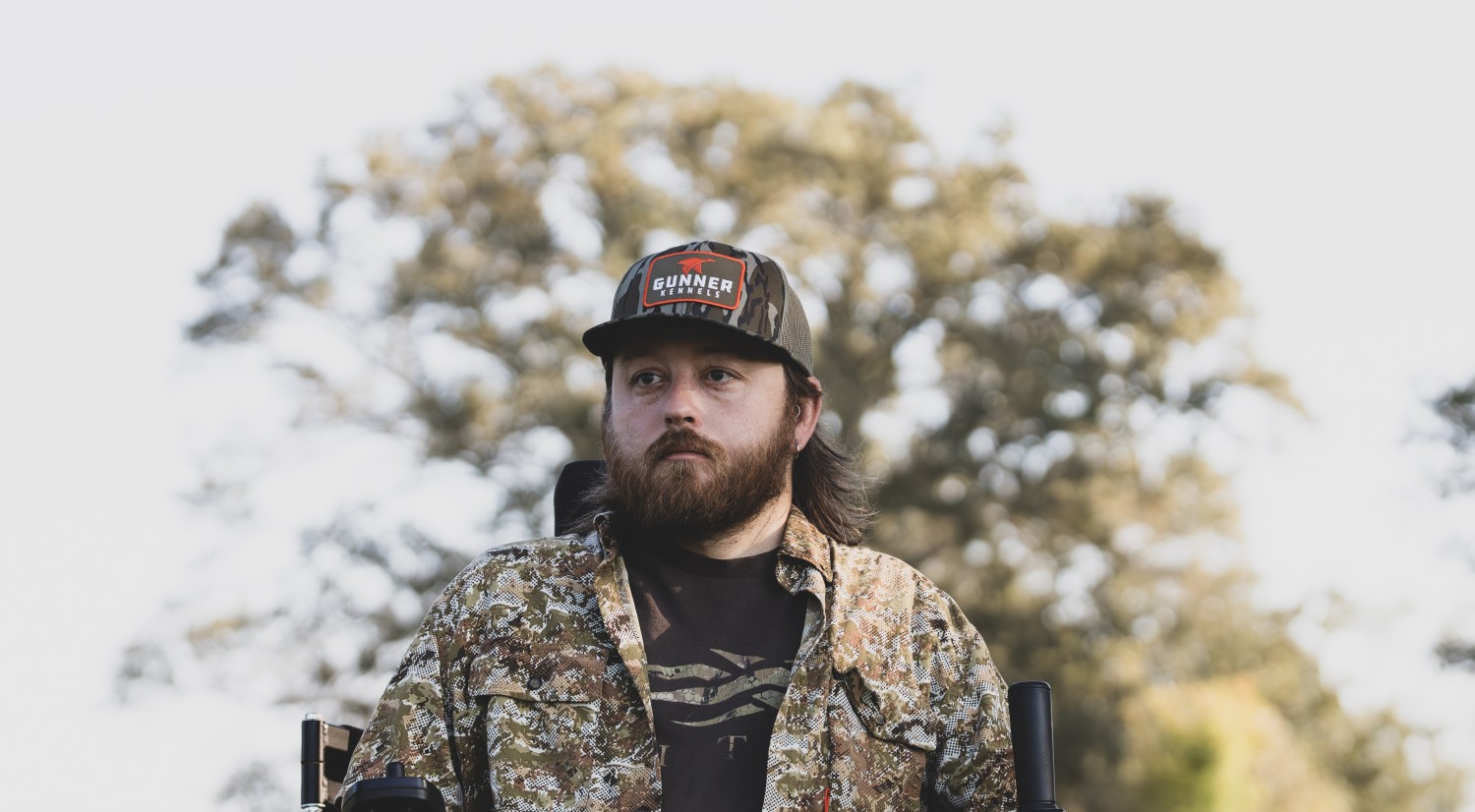

Faces of Waterfowl is a series that features contributing members of the waterfowl community at large, ranging from creatives behind lenses to artisans carving decoys and waterfowl calls. Each person in the spotlight has their own story to tell, whether well-known or on debut. Our goal with this series is to bring the waterfowling community together one story at a time and experience the outdoors from a new perspective through the eyes of those who enhance the waterfowl world.
Whether it is through spoken word, narrative, or various forms of visual media, the ability to capture one’s attention does not go unnoticed. Photography and videography have been taking the waterfowl world by storm, and each year, there are always the particular few that stand out to the crowd, the dark horses that come out of nowhere with works of art that resonate deep within us, and those who quietly hone their craft and build deep relationships with the people they work with. Matt Carey has been the latter, slowly and surely making a name for himself in the creative world and laying the foundation for others to mold themselves after. However, photography and waterfowl hunting were not always in the books for him, so pull up a chair as we dive into Matt Carey’s story.
Split Reed: Who is Matt Carey? How did life look like before ducks, photography, and the outdoors?
Matt: “My name is Matt Carey, and I was born and raised in Georgia, where football reigns supreme during the fall and winter. I spent the majority of my formative years skateboarding and playing guitar, looking to make a career out of one or the other. When skateboarding looked like it was not going to pan out, my goals shifted, and I leaned heavily into the technical side of music. I moved to Tennessee for the recording industry program at Middle Tennessee State University, where I spent countless hours learning from industry professionals and working in the studios. During this season in life, Duck Dynasty was getting extremely popular, and we would have it going on in the background all the time.

One of my roommates would go duck hunting with his dad during breaks in the semester, and I thought it was pretty neat. We would talk about going hunting together, but it never quite materialized until the fall after I graduated from college. I was invited to go hunt in southeast Arkansas, where I shot my first duck, which was a pretty sweet gadwall. After that initial hunt, I was hooked. I bought a kayak, an 870, and a dozen decoys and ventured out into uncharted territory for me. When the hunting season ended, and I had not had my fill of birds, I ventured into extending my hunting season through the camera lens. I created a second Instagram account for duck photos and started following several waterfowl photographers to learn from them. Photographers like Phil Kahnke, Doug Steinke, and many more were early influences in my journey. I ended up borrowing my neighbor’s camera until I was able to purchase my own—a Canon Rebel T6i. The following season, I took that camera everywhere, snagging different lifestyle shots and falling in love with hunting as shooting photos began to open doors for me.”
Split Reed: Tell us a couple of your favorite experiences out in the field.

Matt: “I was on an A-frame hunt over an icy pond hole with Issac Neale and Ben Forehand a couple of years back. It was well below freezing, and the snow was dumping in. I had never been a part of such an experience where everything, from the ground to the water to our beards, was so white from the snow. I had just started playing around with low-light photography, and I captured a cool shot of a headlamp illuminating the snow falling on the ground. Another favorite was two years ago when I was on a fun timber hunt, and my pup, Juno, had one of her first full days of retrieving ducks. I also shot my first black duck, and the sky was filled with the most amazing shades of oranges and purples.”
Split Reed: Initially, you started out shooting photos with Canon and are now shooting with Sony. What does your current rig setup look like?
“I ended up making the switch from Canon to Sony about three to four years ago. I know everyone is all about using the best and flashiest gear, but in my opinion, I do not think any company is better than the other. You should use what you have and get good with your setup before making the jump to upgrade. I had maxed out the features with my Canon setup, and I was looking to do more with the camera. At the time, Sony was giving the best bang for my dollar in terms of features and pricing.
My go-to setup for photos is a Sony A9II with the Sigma 24-70mm Art lens and the Sigma 70-200mm DGDN Sport lens, and for video, I use the Sony A7III that I bought when I first made the jump to Sony. I’m using that setup like 90% of the time. This setup is extremely versatile, allowing for good portrait shots, lowlight shots, and wide shots in the blind. I utilize the 70-200mm lens for reaching out just a hair further as well as capturing those different complexions at 200mm. This lens is my favorite for capturing moments of dogs retrieving their marks, blinds, and people out in the decoys for the separation it provides between the background and subject.

Renting out camera lenses is also a good way to expand your portfolio and get different photos that you have been wanting to capture. I rented a 14mm lens recently, and it’s not something that I need every day, but I had specific shots that I had in mind for a specific job. So, I rented it for a week and got the shots I wanted. I will even rent stuff when I want to go do waterfowl photos when the season ends and the refuge opens. It’s just extra because dropping four to five grand on a piece of equipment when I could have four to five grand in my bank account or investing that money in a different way is better for me, especially for something I would only need for two or three weeks out of the year.”
Split Reed: What is your approach to working with brands and industry professionals?
Matt: “If you hop on any of my social media, you will notice that none of the harvested animals are portrayed in a negative aspect. From the get-go, I established that I wanted to be an example of good ethical hunting and that all animals deserve respect, as they gave their life so I could eat. In a similar vein, I carry the same respect when working with brands and building relationships with them.

At the end of the day, the brand needs to sell its products. Your job is to figure out what they need and how to help the brand succeed. Bring value to the brand by taking the time to invest in them as they are investing in you. Learn different marketing strategies because what the brand needs and what you want can often be on opposite sides of the spectrum. A perfect example would be photos that the brand will pick versus photos that I would pick. Shots that I think are ‘basic’ are often the photos my clients lean toward for their needs. The brand needs a good mix of straightforward showing the product shots, as well as some creative photos that show the product in a unique way.”
Split Reed: What are some pointers you would give to aspiring photographers?

Matt: “Here are my tips for any photographer looking to improve their process and capture authentic moments:
1. Be authentic in the moment. Do not try to stage the photo or let people know you are taking photos.
2. Give minimal advice beforehand. You are there to capture the moments. Let them happen naturally.
3. Be intentional with your shot and position yourself best. Study and research the experience so you are not walking in blind, especially if you are just starting out or it is a new location for you. 4. Learn to break down other photographers’ photos based on what it looks like. Learn how to do that and then apply that to your own photos in your own way.”
Split Reed: Do you have a bucket list photo that you want to get?
Matt: “One bucket list shot that I have had in mind forever is where mallards are pouring into the timber hole with another hunter stepping out from behind a tree to take their shot. Just all the moving parts to make that happen. I look forward to capturing that moment one day.”
Split Reed: What lessons have you learned along the way that are paying dividends today?
Matt: “Being prepared and ready to capture time at any moment. Some birds could dump in the spread, and you might miss an opportunity; it’s the same thing with photography. If you don’t have the camera ready at hand, battery charged, space in your memory card, and easy access to the camera, you’re not gonna be able to get the shot in time. You’re going to miss the moment, and you could try to recreate it later, but it’s just not gonna be the same. I’ve invested in gear like a Peak Design Capture Clip, so when I’m waterfowl hunting, I have a camera even when I’ve got a gun in my hand. When I’m in flooded timber or on a body of water, I’ve got a camera strapped to the shoulder strap on my waders; that way, I always have a camera on me. If I don’t have that camera, I’m pulling out my iPhone to capture the moment. Be ready to capture anything at any time, even if it’s using an iPhone. You don’t want to miss the opportunity because you’ll be thinking about it for a long time after that.

Those are the types of things I feel like my clients appreciate. They enjoy getting authentic moments that don’t feel staged. The photos feel like you were there, and that’s partially because I take photos randomly all the time while I’m hunting. It is hard to give advice because there is so much advice that I can give to anybody. However, you can’t sell a product if you don’t have the portfolio, so taking a lot of pictures has paid off in the long run.”
Split Reed: You have been working with Slayer Calls for a couple of years now. What has that journey been like?
Matt: “I met the guys at Slayer probably three years ago at this point. Bill Ayers called me, and we started to do some work together, and since then, they have just really grown a lot. The company has blown up a bit, and it’s been really cool to help them work through all the growth. On the photo and video side of things, I’ll say this: initially, Slayer was the start of a relationship where I think they were looking for influencers, and I was looking to do something different. When I first got to know them, I pitched a couple of ideas, and they bit on one of them. I did my first photo shoot for them, and they loved it, and from there, our relationship really expanded.
I am always doing something with them every month—whether it’s a marketing video, taking some product photos, or really anything they need. In most of their media stuff, I have some input, which has been fun, and I also help a little bit with strategy. Slayer just released a new duck call that I think is phenomenal, and it’s been my go-to call this whole season. They have got some cool things coming down the pipeline that I think are going to be game changers for a lot of hunters out there, and I am excited to see what’s gonna happen with all that.”
Split Reed: You recently entered the Chene Film Festival with your film, “The Mantle,” centered around Luke Moore and his two dogs. Tell us about that experience.
Matt: “Yeah, so Luke and I met back in 2023, and we started doing a little bit of photo work for Gunner. We both like smoking cigars, so on one of our first or second cigar lounge hangs, we started to talk about this idea where Luke was about to get a new dog, Dex. He wanted to hand off the responsibilities of his childhood dog, Goose, the dog that had pretty much been hunting as long as Luke had, to his new pup and hunt them together on the same hunt. We were talking about doing the hunt around Nashville, and it did not need to be a big hunt. All we needed was to kill two birds, one for the old dog and one for the new dog, you know?

We start dreaming about this idea, what that looks like, and how we capture it. We talked about it for close to a year, and at the beginning of the 2023-2024 hunting season, Gunner came along and said, ‘Hey, let’s partner on that idea, and what if we capture that and make a film out of it. It would be super cool to just capture the bond between a boy, who is now a man, and his dog, then pass that mantle to a new dog.’ It is definitely a bittersweet story that so many people can relate to. We decided to plan out the film, and it kept evolving. The plan was to film in Missouri at Luke’s lease, where he grew up hunting. We tried to do that for about two or three days, and we could not get a bird to work, and we could not kill a bird; it was really tough. I mean, most people remember how tough that season was, and this was all right around New Year’s time. We got invited to go hunt over at North Delta Outfitters, where they film the Daybreak Outdoors show. So we hunted over there one day, and it didn’t really go the way we had hoped it would go. We were kind of feeling a little bummed about the whole thing, and they invited us back the next day saying, ‘Hey, we’re going to make this right. We are going to put you guys in a friends and family-only spot, and we are going to get you a couple of mallards for these dogs to pick up.’ The next day we went back and hunted this beautiful timber hole—big, open with willow trees throughout. Mid-morning, it just all happened. The birds were working the way we wanted them to; we were able to capture all of that action and secure the handoff between the dogs and Luke on video.
At the same time as we were filming everything, Luke and I were thinking, ‘What if we enter this into the Chene Film Festival? You know, I mean, it’s not even done yet.’ We didn’t even know if Chene would even let us enter. It was kind of a dream still at that point, and either way, we were going to release it with Gunner. We quickly put a trailer together and sent in the first draft to Chene, who were really interested in having us involved. This past fall, right before hunting season, we got to show our film in front of essentially four or five thousand people, and that was just an awesome experience. We share so much on social media these days, and oftentimes, you don’t get to see people experience what you create. It was really neat to just be able to show the film in that kind of unique situation. The audience ended up voting for our film as the best film of the whole deal, and that was just really, really neat. We were super humbled to be chosen by everybody and extremely honored, and now you can watch the film on both Chene’s and Gunner’s channels over on YouTube.”
Split Reed: Now that we are into 2025, do you have any cool projects you are looking forward to?

Matt: “Man, there is so much that I can’t say, haha. There are a lot of cool brands that I’m getting to work with. Gunner, Migra, and Slayer, to name a few, are just doing some really cool things and disrupting the industry. I’m just excited to be a part of the journey with those brands. We’ve got some cool stories that we’re looking forward to releasing in the coming seasons, and I’m really excited to be a part of that.
I also always look forward to meeingt new people every year. Over the years I’ve met a lot of people who have become great friends, and so I’m looking forward to expanding my network of friends in the hunting world. I mean, pretty much everybody is a friend if they can all get along and enjoy the hunt, so I just really enjoy that aspect of the community. To add a personal level, outside of how work goes, I am looking forward to working with my dog, Juno, over the summer as hunting season comes to a close here in about fifteen to sixteen days. I’m looking forward to running some hunt tests, just taking her to the next level and putting her on more birds next year.”
For more about the film, check out our exclusive Behind the Lens with Luke Moore.
Split Reed: Do you have any parting words for anyone looking to get into photography?
Matt: “Learn to use your camera settings well and think on your toes quickly. Take more photos because you get better as you use your camera.”
Matt Carey can be found on Instagram at @of_the_field.