

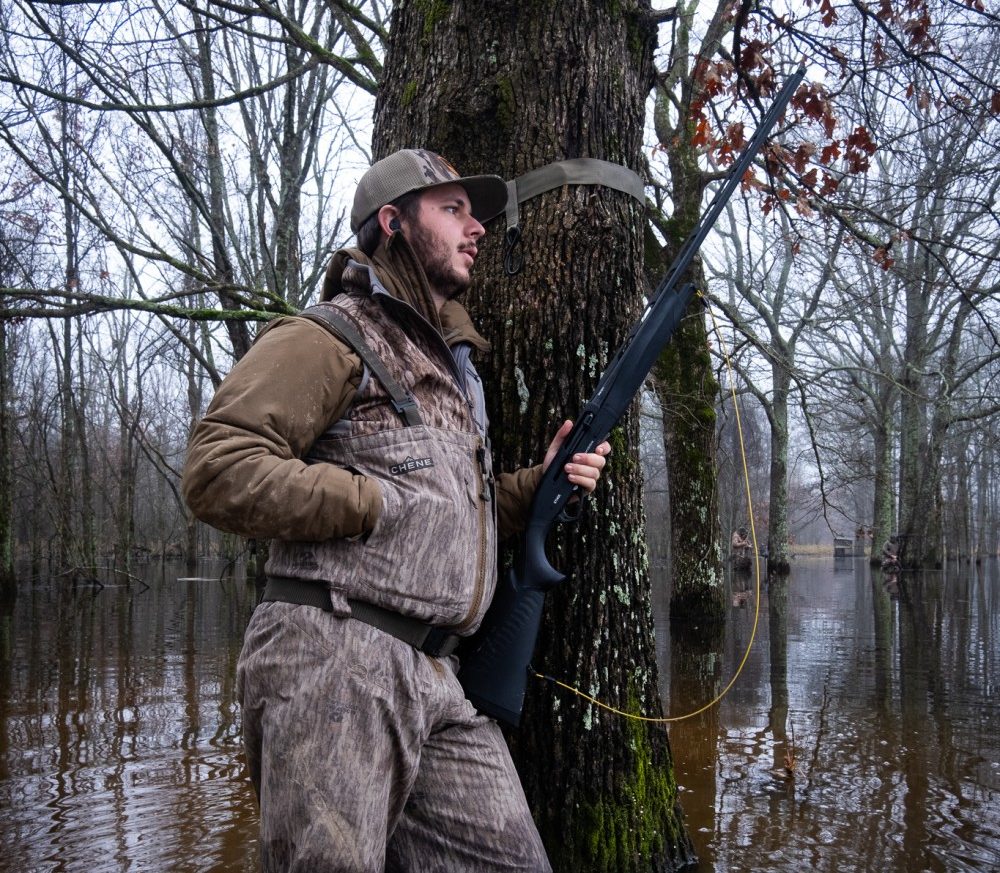

The thought of big ducks landing in small water is what many consider to be the ultimate waterfowl hunting experience. In many ways, it’s the epitome of duck hunting—it requires scouting, working birds with calls, and when everything comes together, big ducks landing feet down in the decoys. If you haven’t experienced a small water shoot, there’s no better time to get on one than late-season, when other birds tend to be stale. A proper small water feed, with little pressure, can mean the difference between a great hunt and a slow morning. Follow along as we break down how we find and hunt late-season small water.
Finding Small Water
Small water consists of creeks, sloughs, and small ponds that ducks use throughout their migration. Come late-season cold, however, options can be limited. Ponds are the first to freeze up, and unless you have private property and an ice-eater, they become unhuntable. If you’re hunting a warm water slough, you won’t have to worry about freezing, but access can often be tough. Many of the best sloughs are on private land or are highly regulated on public land. That leaves most hunters with creeks and tributaries as the best small-water access to hunt in the late season.

To find a creek or tributary worth hunting, scouting is key. Many of the best public land small-water hunts are in proximity to big-water areas. Birds will often seek refuge in huge rafts on the big water before trickling off to find small water feeds. Come late season, hunters should focus their efforts on tailwater systems if possible. Since these are dam-regulated, they remain at a consistent temperature year-round and stay open when other systems freeze up. Along these big rivers, look for tributaries, springs, or small water offshoots that are off the beaten path. Putting in the time to scout can pay big dividends and help find unpressured birds.
Accessing Small Water

Once you’ve located an area to hunt, access becomes the next issue to tackle. In some instances, you may be fortunate enough to walk in or paddle in with a canoe. However, as mentioned before, many of the best small-water spots are off big-water. For this, a boat, particularly a jet boat, is a necessity. Jet boats allow you to run long stretches of water and get through shallow areas that a standard outboard can’t. This season, we’ve relied on the Excel Switchblade 1864 paired with an 80HP Mercury jet motor. The 18-foot boat allows us to transport several hunters and gear to and from the ramp, while the jet motor allows us to draft in just inches of water. This setup is arguably the most important piece of gear we have for finding and getting to small water that others can’t reach.

It is worth noting that our jet boat is an access tool, and not a boat we hunt out of. When hunting small water, a good hide is important, so we prefer to stash the boat nearby and out of sight. We’ll then use panel blinds or natural brush to hide near the hole we are hunting.
Less is More
The adage “Less is More” is particularly true for hunting small water. Very rarely is the kill hole wider than 30 yards, so take this into account when setting your decoy spread. In general, if you think you have too many decoys, you do. Typically, six to twelve decoys are all you need to kill ducks in small water. Anything more can come across as unnatural, especially when ducks are trickling into the spot as singles and pairs.

While running a big spread isn’t essential for small-water hunts, using the right decoys is. For these hunts, we prefer to use ultra-realistic decoys, like those from Dave Smith Decoys, or fully flocked mallards. By late season, ducks have mastered picking out a spread. Add to that, trying to decoy them in close and realistic decoys is a must. Another tip for small water decoy spreads is to use flocked black ducks instead of hen mallards. Since no one makes flocked hen mallards, black ducks serve this purpose, and their darker coloration can help make you spread pop to birds working.

The last thing to consider for your decoy spread is motion. In moving water, the decoys will naturally dance with the current, which is often all the motion you need. That said, if you want a little extra motion, agitators and ripplers create natural movement and commotion. This late in the season, we’d recommend not using a spinner, as stale birds can often pick it out well beyond shooting range.
Hunt Weather
Some small water spots are only used by birds for a quick rest on a longer trip south. If that’s the case, hunt these areas with the weather. As temperatures drop and bigger holding areas freeze up, birds have no choice but to leave. If your small water hole is along the flight path, there’s a good chance birds will stop and rest before continuing their journey. Check the weather regularly for storms, drops in temperatures, and north winds—these can all push birds south. It’s also essential to monitor the weather north of you, as this can push birds before the weather hits where you hunt.

When a storm is coming, the best days to hunt are the day of the weather and the days prior to it hitting. Birds know when the weather is coming and will often leave a few days before it hits to get ahead of the storm. Take this into consideration when you are planning your hunt, as you don’t want to miss the push of fresh ducks. There’s been plenty of small water hunts where the day before the storm is lights out, only for the ducks to leave the day the weather hits.
Final Thoughts on Hunting Small Water

Regardless of where you live or what you hunt, small water hunts are attainable as long as you put in the work. Time spent scouting, monitoring the weather, and a proper setup will leave you picking away at singles and pairs eager to be in the hole you’re hunting. We’ve spent several seasons mastering small water hunts, and these tips are the result of hard-earned trial and error. But for all the hard work, when everything lines up, a small water is about the most fun you can have in the blind.