

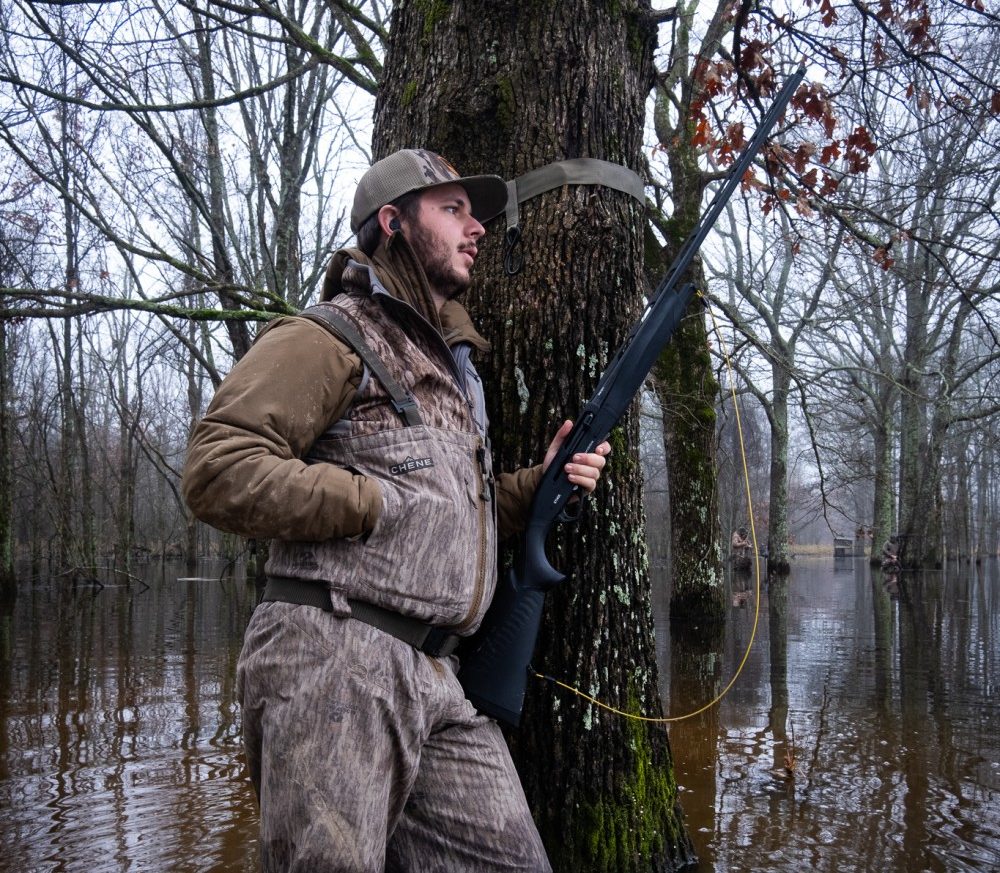

In a perfect world, every tom would fire off at your calls and come thundering in on a string. After all, that’s the moment most of us chase every spring. Unfortunately, those moments can be few and far between, especially when a tom finds hens. There’s nothing more frustrating than hearing a gobbler thundering off, only to discover he’s grouped up with his hens with no plans to leave anytime soon. Your typical call cadence may entice a gobble or two, but the tom never shows up. If you find yourself in this situation this spring, switch up your call cadence and talk to the hens. When done properly, this technique can draw in the hens, gobbler in tow, that other hunters have completely overlooked. Here’s everything you need to know to talk to hens.
When to Call Hens
Calling to hens is an effective technique when used at the right time. With the goal of turkey hunting being to kill a gobbler, you want to talk to hens only when you know a gobbler is with them. Otherwise, you’re calling in birds you can’t shoot. The best times of year to do this are early season, when birds are still partially in their winter flocks, or later in the year, when toms are henned up. In both instances, these gobblers can be extremely hard to pull from the flock. After all, it’s not like they need to leave to find more hens. In these scenarios, bringing in the hens, particularly the boss hen, will have the toms following along.

Listen to hear whether or not you’re dealing with a lone gobbler or a henned-up tom. Birds with hens will sometimes gobble frequently to your calls, but never get closer as they don’t feel a need to leave their hens. Another good indicator of henned-up Toms is hen calls. If you hear frequent hen clucks, purrs, yelps, and cutts near where you heard a gobbler, there’s a good chance that bird is henned-up.
How to Talk to Hens
If you’ve determined your tom is henned up, it’s time to start talking to the hens. But before you start hitting them with every cutt/yelp combo you can think of, it’s best to understand what calls to use and how to use them.

In general, talking to hens consists of two main techniques. The first and easier option is mimicry. To mimic hen sounds, you first want to locate the group of hens and the gobbler. Once you have a general area they are in, sneak in or ahead of them. The closer you can get, the better chance this technique will work, as a flock of hens with a gobbler can be hard to call over long distances. Now listen to the sounds the hens are making, and begin to softly mimic them. The goal is not to alarm the birds but to convince them to come over and investigate. This technique can take some patience, but the process is simple: listen, copy, repeat. If you do a convincing enough job, the hens will make their way to you, hopefully with a gobbler in tow.
The second technique to talk with hens involves picking a fight with one particular bird, the boss hen. There’s a good chance many hunters have experience with a boss hen. The boss runs the show, establishes the pecking order in flocks, and has a keen eye for anything out of place, like hunters. That said, understanding how to use a boss hen to your advantage can make the difference between punching your gobbler tag or going home empty-handed.
To call in a boss hen, you’ll need to ruffle some feathers, literally. Once you’ve located a flock of hens with a gobbler, start with aggressive cuts and yelps. If all goes as planned, the boss hen will answer with aggressive calls of her own. These calls are typically raspier than those of other hens in the group, an easy identifier. When you hear the response, the key to pulling in the boss hen is to immediately answer back. You want to cut off the hen with more cuts and yelps, starting the ensuing battle. Keep this up until the boss hen closes in, bringing with her the rest of the flock and the gobbler you’ve been waiting for.
Double the Odds

That cat-and-mouse game of turkey hunting is something hunters look forward to every spring. To be successful season after season, good hunters need to be adaptable to different situations. Learning to talk to hens is a skill set that can double your hunting opportunities. Now you can talk to henned-up birds as well as lone gobblers, making you a well-rounded turkey hunter.