


OPINION: The Future of Utah Swan Hunting Could be in Jeopardy
Ryan Barnes for SPLIT REED
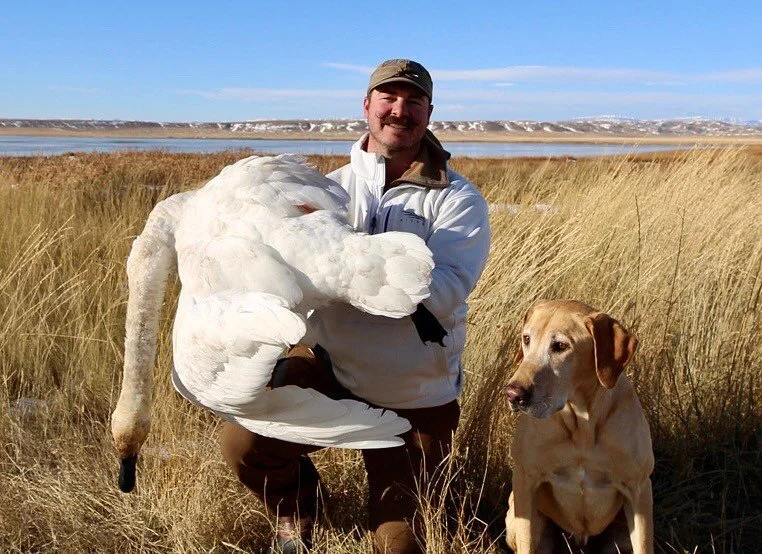
Ryan Bassham with a 2020 Tundra Swan
Utah is home to some of the best waterfowling in the nation. What used to be a “sleeper state” has now become a top destination for waterfowlers seeking to shoot mixed bags ranging from cinnamon teal to canvasbacks. With multiple WMA hunting locations, and a federal refuge, it’s easy for hunters to find themselves drawn to the Great Salt Lake region of the Beehive State.
One of the most alluring parts of Utah waterfowling, however, is the amazing swan hunting that the state provides. Each year hunters set out in pursuit of swans all throughout the salt lake region in hopes to bag a mature swan. A tag must be “drawn”, and the state works through a point system, allowing hunters to increase their odds of drawing a tag each year they apply for a permit and don’t draw out.
When a permit is drawn, hunters must take a swan identification course to learn the differences between trumpeter swans, and tundra swans. Trumpeter swans are still very closely managed and while it’s not illegal to shoot them in Utah (though the state tells you not to), they do put a limit on how many trumpeters can be shot before the hunt is shut down. Once a swan is shot, regardless of species, it must be checked by the state within 72 hours of harvest so it can be recorded in the state’s data-base. This allows the Utah Division of Wildlife (DWR) to keep a tally on how many birds have been harvested, and how many trumpeters have been killed, so they know if they have to shut down the hunt if the limit they set has been reached.
Each year that limit is set at 20 trumpeters. For the first time last year (2019) that limit was reached, and the hunt was shut down early. Obviously leaving many hunters frustrated and upset. The season usually runs from the first weekend in October, to the second weekend in December, allowing hunters to harvest swans during their peak migration through the state. Both those that had killed swans, and those who hadn’t were angry at the fact that so many hunters had killed trumpeter swans, putting the state’s crown jewel waterfowl hunting experience in jeopardy. Rumors circulated that 2020 wouldn’t have a swan hunt, that tag numbers would be cut, or that they would actually raise the number of trumpeters that could be harvested based on the larger amount seen migrating through the state.
None of the rumors came to fruition, and 2,750 tags were given out for the 2020 swan hunt. The first week of November usually is the time when the swans arrive in the state, and so was the time that first trumpeters were reported as being shot. By the beginning of the third week that number had already sky-rocketed to 12, and by the end was rumored to be 17. Then, on November 27th, the 20th trumpeter swan was shot and checked in, shutting down the swan hunting the state of Utah for the second straight year. This left the remaining hunters with tags in their pocket, but no chance to kill a bird.

Tundra Swan in flight. Sourced via Delta Waterfowl / Photographed by Joe Subolefsky

Trumpeter Swans. Sourced via Delta Waterfowl / Photographed by Tyler Zimmerman
So the question is now- What happens next? What impact will this have on Utah’s swan hunt? As a lifelong Utah resident and someone who will likely draw a tag next year (if there’s tags to be drawn), I have to wonder what the USFWS will allow for hunting swans in the state of Utah when the only state seeming to have a problem with killing trumpeters is Utah. As one of only 9 states where shooting swans is allowed, it isn’t far-fetched to see an outcome where swan hunting is shut down.
Unfortunately, there seem to be hunters in the state of Utah that specifically target trumpeters. While this is not only unethical, it’s extremely selfish. The reality is, it isn’t terribly difficult to distinguish the two birds. Between the sound they make, the difference in size, and the markings on their bill, shooting a trumpeter is a mistake made by someone who usually either didn’t take enough time to be judicious about what they were shooting, or took enough time but chose to shoot anyway. There can be honest mistakes but likely not 20 honest mistakes two years in a row. Especially considering most swan hunters are life-long waterfowl hunters.

Swans in Flight. Photo Sourced via KSL News Radio / Photographed by Mike Christensen
After two years in a row of trumpeter swans being killed at an extremely high and fast rate, I believe that there will be a drastic change to how Utah manages the swan hunt in the future. They may not completely do away with it, but one would have to imagine that it will result in unfavorable changes to regulations, tag allotment, and other elements that play into the hunt.
At this point we can only wait and see what happens. But for those wanting to cross a tundra swan on the Great Salt Lake off your bucket list, you might want to cross your fingers that nothing will be changed after the past two years results.


Great article! But I do want to note many more are killed in Montana than utah but as part of utah being allowed to be one of the 9 states we had to come to an agreement on a number that shuts the hunt down with activists that still believe a thriving trumpeter population is at risk. I’m still frustrated when people post bragging that they targeted the trumpeter when they should do the right thing. I’ll be sad if it closes mainly cause it’s a hunt that young kids can be a part of and keep waterfowl hunting growing.
Bryce, author of the article here, great insight. We appreciate you reading! It’s become a growing concern and unfortunately I believe that even though there are states where more trumpeter swans are killed, the Utah State DWR will receive more pressure to adjust how they run (or even allow) swan hunting moving forward.
Great read!
We also need to do studies on why Utah is killing more trumpeters. Not just people targeting. The last 2 years we’ve had early freezing temperatures north of Utah causing the swans to push in earlier than normal! And 2 years ago they opened the boundaries bigger for the swans! Utah should go back to the old boundaries and see if that has an effect on it!