

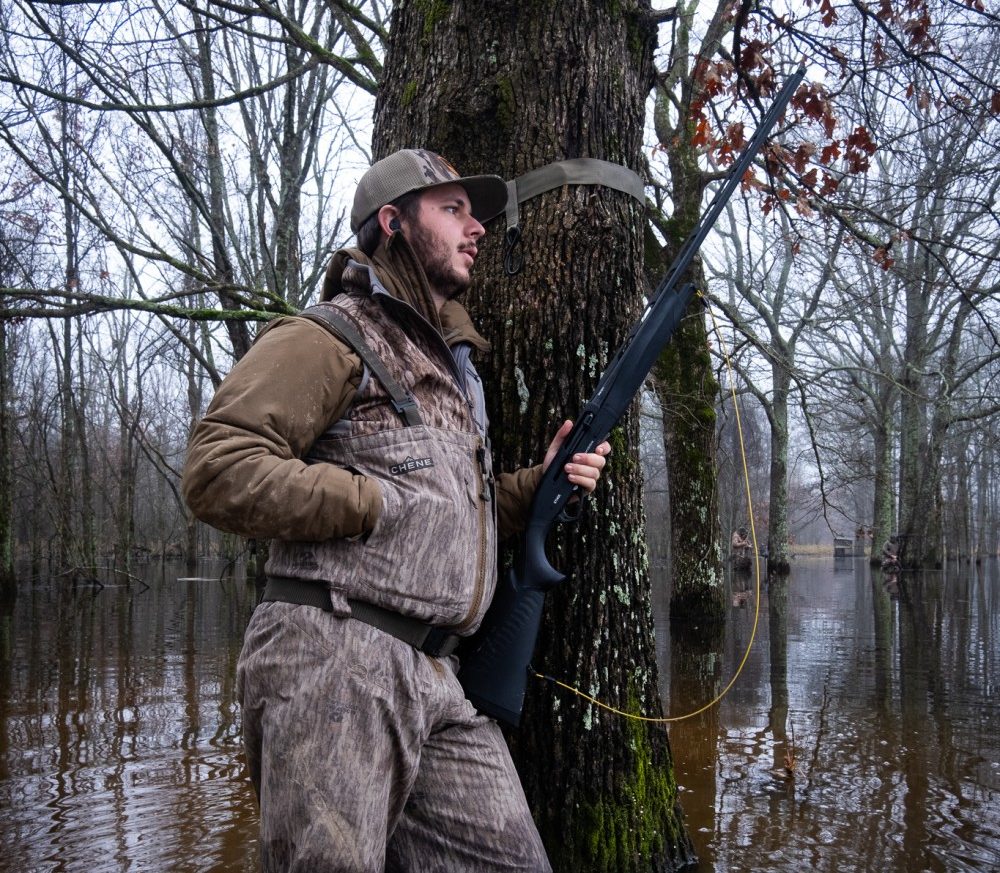

Goose bands are a critical part of conservation. Pioneered by the great Jack Miner, bands tell a story about the bird and its migration. The original Miner bands consisted of a piece of steel stamped with a number and Bible verse wrapped around a bird’s leg. Since its inception, aluminum bands, stainless steel bands, neck collars, and telemetry backpacks have all been used to get a better understanding of bird behavior. Biologists use these bands as tools to determine where birds travel, their age, and harvest rates.
If you are fortunate enough to shoot a bird with a coveted piece of jewelry, this is where the bird’s story begins. Reporting the band gives hunters a glimpse into their bird’s journey–how old the bird is, where it came from, and how far it traveled. While shooting a banded bird is an accomplishment on its own, some bands reveal incredible stories.
Fascinated with goose bands and the stories that go along with them, we tracked down some of the craziest goose bands ever harvested. From old birds to incredible migrations, these are the craziest goose bands recorded.
1. The Oldest Emperor Goose

Emperor geese are the rarest and hardest goose species to harvest. So much so that Alaska only gives out 25 tags a season to non-resident hunters each year. Emperor geese populations consist of just 140,000 birds globally–a mere 10,000 of these have ever been banded. Hunters and birders have been fortunate enough to report 177 of these bands. One particular band that was reported in 2013 tells the story of a 20-year-old and 3-month-old emperor goose. This is by far the oldest emperor goose ever recorded, considering experts believed their lifespan to top out at 12 years in the wild.
2. The Lost Snow Goose

Bad weather and winter storms are responsible for several birds turning up in areas you wouldn’t think possible. This is the case for Adrian Smasne during a snow goose hunt in Washington. On this particular hunt, he harvested a handful of snow geese, with one sporting a band. Upon submitting the band info, he discovered that the lesser snow goose had traveled nearly 2,600 miles from Zvozdnyy, Russia. Every year birds turn up in strange places, and this particular bird is rather exceptional.
3. Two in a Row

Many hunters will go their whole lives without shooting a goose band, so shooting two in a season is an accomplishment in itself. For Dr. Stan Chace, he did just that in 1962. Chace would harvest his first banded goose in October of that year. Two months later, he harvested another banded goose. What is really mind blowing were the band numbers. The two band numbers were one number off, meaning Chace had shot two geese at different times that were consecutively banded. The numbers were 518-31661 and 518-31662.
4. The Oldest Canada Goose

Canada geese are by far the most targeted and harvested geese hunters pursue. They have an average lifespan of roughly 10-24 years in the wild. In 2001, a honker defied the odds when a hunter reported a band in Ontario, Canada. The bird had been originally banded in 1969, making it 33 years and 3 months old. There’s no telling how many thousands of miles this female goose migrated throughout its lifetime.
5. An Eagle Head for the Ages

To the diehard goose hunters shooting an eagle head blue goose is at the top of the list. A blue goose is a subspecies of snow goose, sporting a white “eagle head” and a dark body. The oldest blue goose ever recorded is 30 years and 8 months old, banded in an unlikely state, Arizona. While this bird was exceptionally old, other old blue geese have been harvested, including a 19-year-old and 17-year-old bird in Arkansas.
Getting Lucky
When it comes to shooting a banded goose it ultimately comes down to luck. You have to be in the right place at the right time. Chances are you’ve likely been in that place before and the banded bird may have slipped away unnoticed. When your time comes and you shoot a banded goose the fun begins. Reporting the band reveals a lot about the birds history, migration pattern, and age. Who knows maybe your bird will end up on this list.
We are always on the lookout for exciting band stories. If you have one to share send it our way at editor@splitreed.com.