

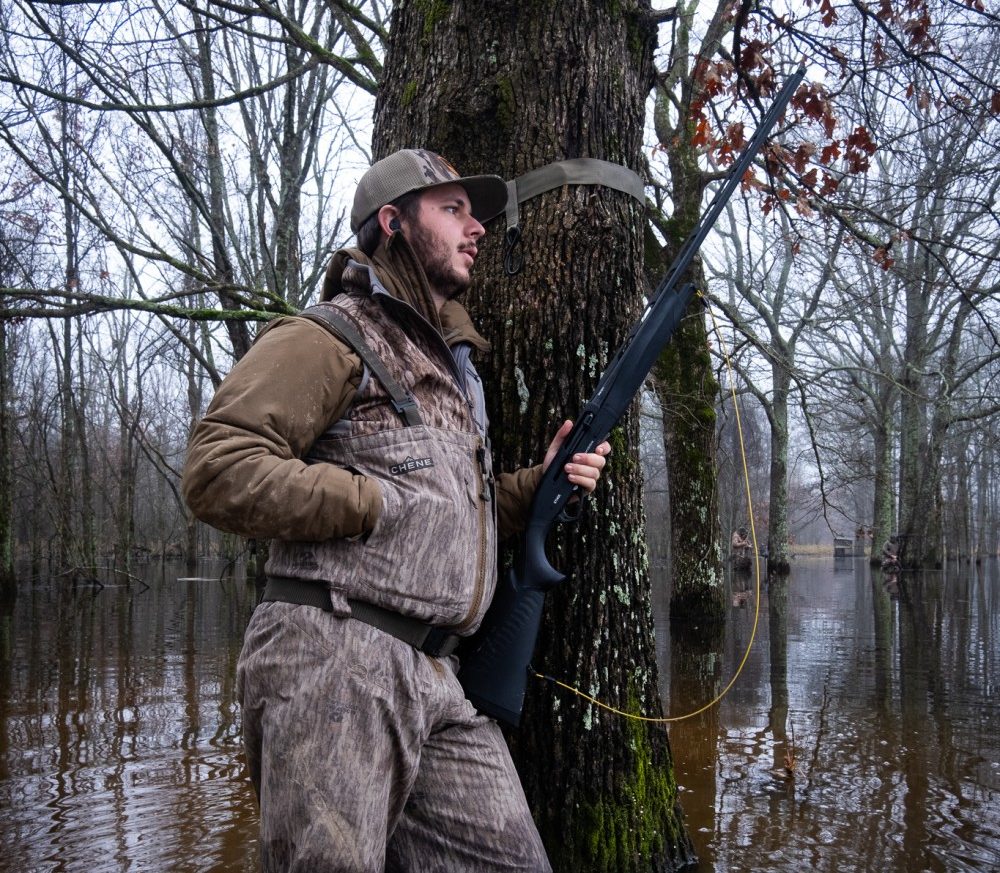

Waterfowl hunting involves a code or set of rules, typically passed down from generation to generation. These rules include how to hunt, where to hunt, how to set the spread, and even how to call. Unfortunately, learning from older generations often comes with a stigma around hearing protection. Over the years, we’ve heard it all: I can’t hear the birds work, my calling doesn’t sound the same, and I can’t hear my friends in the blind. While these reasons may have been valid 20 years ago, advancements in modern technology have flipped these arguments on their head. This past season, we tried out the TETRA Hearing AlphaShield and CustomShield to see how new technology stacks up against the stigma of hearing protection in waterfowl hunting.
The Hearing Protection Dilemma:
The claims hunters make about traditional hearing protection have a lot of truth. These days, there are two main types of ear protection commonly used by the majority of waterfowlers: traditional foam earplugs and entry-level electronic ear protection. Each has pros and cons, and each contributes to the stigma of hearing protection in waterfowl hunting. Foam earplugs are cheap, but they muffle sounds like duck calls. In addition, whistling wings and faint calls can be hard to hear.
Entry-level electronic hearing protection protects your ears from harmful sounds while amplifying things like voices, calling, and ducks flying by. Unfortunately, entry-level products have left many waterfowlers with a bad taste in their mouth. These products often distort the sound of calls, pick up a bunch of wind noise, and can be bulky (especially ear muff styles).

That brings us to premium electronic ear protection. With several options on the market, think of these products more like hearing aids than traditional hearing protection. They still protect your ears from harmful sounds but actively compensate for existing hearing loss and deliver clean, non-distorted audio. The result is a seamless transition to calling, wings whistling, and hearing as expected. So what’s the downside? It’s typically the initial cost of investment, but before you make a decision, we’ll break down our experience in the duck woods this fall.
A Season Wearing TETRA:
To me, hearing protection is of particular importance. I was born with hearing loss in my left ear, so hanging on to what I still have is a must. Having lopsided hearing also comes with issues in the woods. Pinpointing sounds is nearly impossible, so I knew I needed hearing protection fine-tuned for my needs. Prior to the season, I reached out to Dr. Bill Dickinson, audiologist and co-founder of TETRA Hearing. He ran me through their offerings, reassured me I’d be able to hear normally for the first time in years, and had me submit a brief online hearing test. Soon after, TETRA’s AlphaShield and CustomShield offerings arrived.
The AlphaShield is Tetra’s intro hearing aid. It offers tunable audio outputs and specific modes tailored to your pursuit. The CustomShield is a step up, offering more range in tuning and custom molds to ensure a secure and snug fit. Each model comes in rechargeable or battery powered options. I opted for the battery version and a pack of hearing aid batteries in my blind bag. That way, as long as I had batteries I had hearing protection.

Having hunted with over-ear muffs for several seasons, I was skeptical at first. I took them out to the marsh on an afternoon hunt for a quick test and was immediately in birds. For the first time, I could hear equally out of both ears, pinpoint where other gunshots sounded off from, and hear the signature sound of a flock of teal zipping by. I hit the call and heard the crisp, clear notes I was used to blowing without ear protection.
Later that season, I took a trip to the hardwoods of Arkansas. Here, loud volleys echoing off trees is the norm—the perfect test. The first morning in the timber, I waited as birds began to work us. At the last second, they peeled off and headed for another timber hole. I said to the group, “Man, that other hole is wailing on the call.” To my surprise, no one else heard it. Were the hearing aids really that good? I waited for the next flock to work that hole, reassuring myself I wasn’t imagining things, and was met with the sounds of eager callers yet again.

Later that morning, a group of mallards locked their wings, falling out of the sky and into our timber hole. It was time! I mounted my gun, and an ensuing volley of chaos ripped through the hole as greenheads tumbled into the water—my first Arkansas mallard. After the excitement settled, I realized the distinct sound of gunshots echoing off the trees never hit me. The TETRA CustomShields had done their job.
Final Thoughts:

Hearing is something you can’t get back once you lose it. Take it from me, who’s been battling it my entire life. Protecting your ears is important for your quality of life and quality of hunting. The stigma of wearing ear protection in the duck blind stems from years of poor solutions. With advances in modern technology, hearing aid companies like TETRA have changed that. I rest my case that the stigma around hearing protection and duck hunting is dated. While the initial investment is steep, premium electronic ear protection will ensure you protect your ears without sacrificing the sounds of the duck woods.