

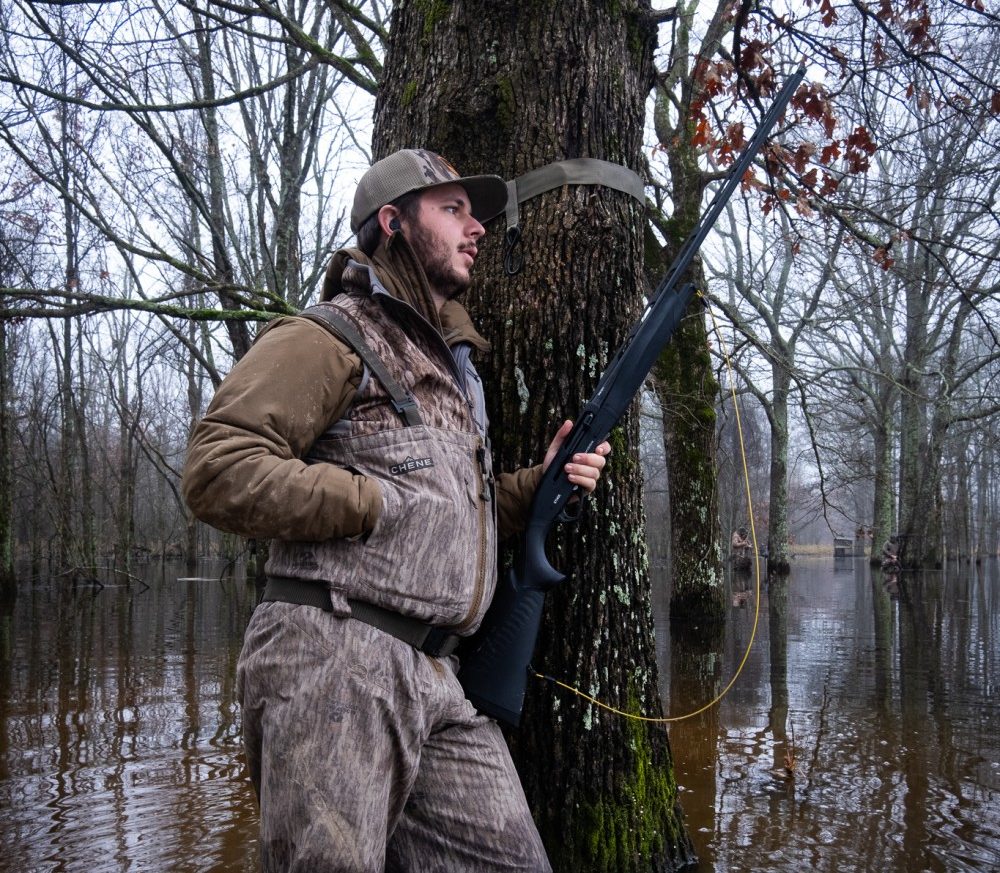

This Fourth of July, the United States turns 250 years old, and with that, we’re celebrating 250 years of waterfowling in America. From pivotal conservation wins to inventions that changed the course of hunting history, in honor of the 250th anniversary, we put together a timeline of some of the biggest moments in waterfowl history.

250 Years of Waterfowling in America
1800s: Start of Market Hunting
In the 1800s, market hunting began to pick up steam as hunters harvested thousands of waterfowl to supply markets and restaurants.
1815: First Private Duck Club
The Tally Ho Hunting and Fishing Club was created in 1815 in Louisiana. This private duck club is widely considered the first one in America.
1856: Oldest Duck Club in America Formed
In 1856, the Winous Point Shooting Club was created in Ohio. This duck club is still active today, helping pioneer many of the early wetland conservation practices.
1860s: Punt Gun Bans
Prior to the federal ban of punt guns, states began banning them in the 1860s in response to dwindling duck numbers due to market hunting demands.
1863: First Modern Call
In 1863, Fred Allen of Monmouth, Illinois, created the first modern-style call. This early call featured a barrel, stopper, and internal reed system similar to today’s calls.
1873: Decoy Mass Production
In 1873, the Peterson Decoy Company was created in Detroit, Michigan. The factory standardized processes and poses for turning wooden decoys.
1882: First Pump Action Shotgun
In 1882, the Spencer 1882 was created, which is widely credited as the first pump action shotgun. This design featured a 5-round tubular magazine, similar to today’s shotguns.
1900: The Lacey Act
In 1900, the Lacey Act was passed to protect migratory birds. The original act made it illegal to transport illegally harvested birds between state lines in an effort to cut down on poaching.
1903: First National Wildlife Refuge
On March 14, 1903, Theodore Roosevelt’s executive order created the Pelican Island National Wildlife Refuge—the first of many wildlife refuges to come.
1904: Jack Miner Bird Sanctuary Founded
In 1904, Jack Miner founded his bird sanctuary in Kingsville, Ontario, Canada. Shortly after, in 1909, he released his first banded duck, pioneering the technique of banding birds for research purposes.
1911: Delta Waterfowl
On September 25, 1911, James Bird Burnham created the first iteration of what would later become Delta Waterfowl. It was originally named the American Game Protective Association and played a pivotal role in aiding the development of the Migratory Bird Treaty Act and the U.S. Federal Duck Stamp.
1918: Migratory Bird Treaty Act
In 1918, the Migratory Bird Treaty Act was passed, protecting over 1,100 migratory species, including ducks and geese. This famous piece of waterfowl legislation created the federal framework for waterfowl season while outlawing commercial hunting and the use of punt guns.
1920: Federal Banding Program
In 1920, the Federal Banding Program was created, establishing banding programs for ducks and geese that are still used today.
1934: First Duck Stamp
In 1934, the First Federal Duck Stamp was created and sold. This first stamp featured artwork by Jay N. “Ding” Darling depicting two mallards landing in the marsh. The first stamp cost just $1 and established a process for raising money to fund waterfowl conservation.
1937: Ducks Unlimited
On January 29, 1937, Ducks Unlimited was created by a group of sportsmen and conservationists as a result of plumeeting duck numbers from the Dust Bowl that swept across the plains in the 1930s.
1940: Armistice Day Storm
On November 11, 1940, a storm for the records came through the Upper Midwest and Great Plains. Quick drops in temperature, severe wind gusts, and blizzard conditions quickly turned one of the best days of duck hunting into one of the deadliest. After the storm passed, over 50 duck hunters were found dead.
1968: Waterfowl Point System
The Point System of waterfowl limit harvest was established in 1968 and ran through 1988. Developed in response to dwindling duck numbers, the new limit would be 100 points. Different point values were assigned to different species and sexes. Once a hunter hit 100 points, their limit was filled.
1972: Duck Commander
In 1972, Phil Robertson created Duck Commander, along with his first mallard duck call. His calls would later change the future of duck hunting history forever, making quality, realistic-sounding calls available to the masses. In 1987, he released Duckmen I: Duckmen of Louisiana on VHS.
1988: AKC Master Hunter
The first Labrador Retriever to earn the AKC Master Hunter title in the United States was CH. Romany Sun Jester CD, MH (call name “Jess”), owned and trained by Alan Kottwitz in 1988.
1991: Lead Ban
In 1991, lead shot was banned for migratory bird hunting. This event led to the creation of steel shotshells and other non-toxic shots commonly used today.
1999: MOJO
In 1999, MOJO created the first spinning-wing motion decoy. These revolutionary decoys were lethal, offering realistic motion and consistently decoying ducks.
1999: Snow Goose Season
Due to exploding snow goose populations, in 1999 the Light Goose Conservation Order was established to expand hunting opportunity, while loosening restrictions. This order was created to better manage this species and the associated damage they cause.
2025: Pintail Limits
Duck hunters seeking to harvest pintails received a welcome bit of news in 2025. The previous 1 bird limit was bumped to 3 birds across all four flyways.