

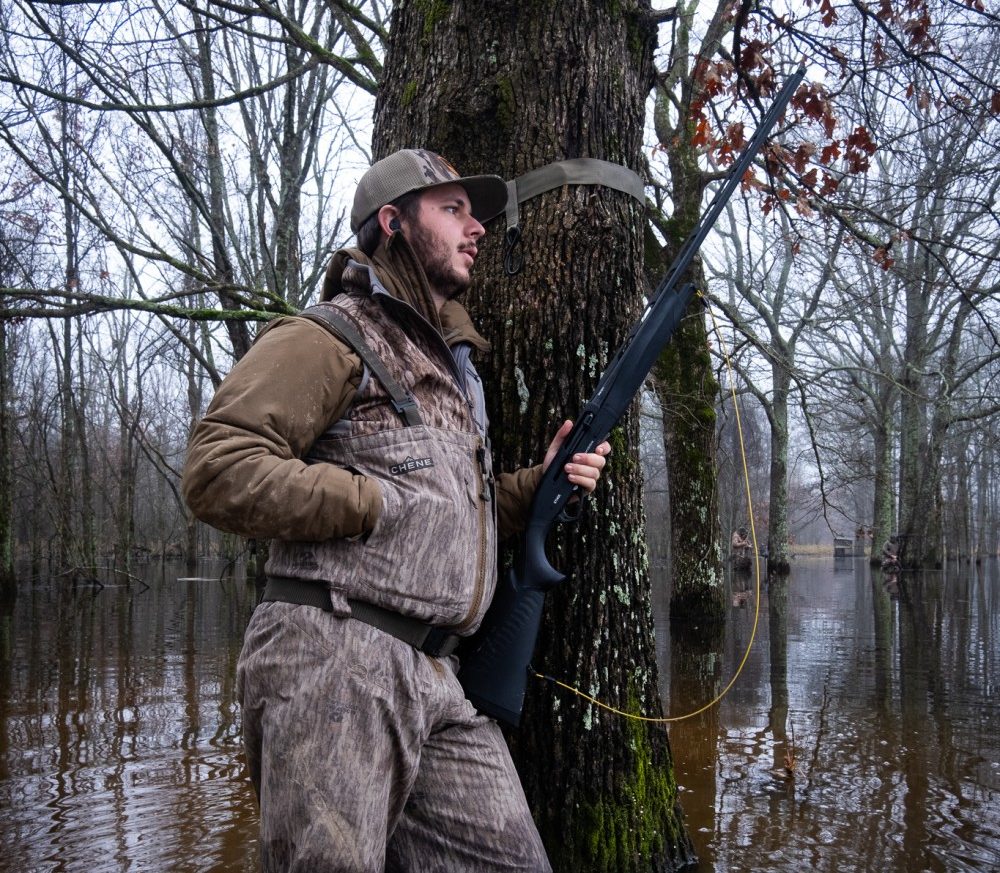

Fooling ducks to come into range is a delicate dance. Your decoy spread and hide need to set the stage, and your calling has to coax birds within range. Add to that, it only gets harder as the season goes on and birds wise up. Whether you’re an experienced caller or just starting out, learning the right notes and when to blow them can help you finish more birds. While it’s tempting to blow your calls like you’re standing on the stage of the World Duck Calling Championship, this will often flare more birds than it will finish. Instead, focus on these four duck calls every hunter should know—sometimes less is more.
1. Quack

The quack is arguably the most important call in a duck hunter’s repertoire. It’s the first call new hunters should learn and the building block for many other calls. To blow a quack, practice saying “quit”, “hut”, or “vut” into the call. This will help you visualise the correct airflow into the call. Emphasize the “T” sound at the end of the call to achieve the signature cut-off at the end of the quack. In the field, a simple single quack or three quacks in a row are often all you need to pull birds and have them land in your decoys.
2. Feeding Chuckle

The feeding chuckle is the sound ducks make as they are actively feeding. When other birds hear it, they associate it with food and safety, a good combo if you’re a way duck. The call sounds like a continuous rolling call or chatter. To make this call, start with a short “tuk” or “chuk” sound. When you are first learning this call, focus on the sound and not the speed. The more you practice it, the faster you will be able to call until you master the feeding chuckle. Use this call as a standalone call or mix it with a few quacks to consistently fool birds.
3. Comeback Call

If your other calls fail, and ducks are heading elsewhere, your last resort is the comeback call. To ducks, this call is a cue that says, “Come back, you missed me.” When used at the right time and with the right sound and cadence, this call can convince unwilling ducks who didn’t want to play the first go around. The call is a series of notes based on the quack. The first is a loud, long note followed by shorter notes in rapid succession. Use the comeback call as ducks are flying away with a goal of turning one duck to give yourself a second chance. If you do manage to pull the birds, switch back to less aggressive calls like the quack and feeding chuckle.
4. Whistle

Whistle calls are handy to have in any hunter’s quiver when birds other than mallards are around. Pintails, teal, and wigeon all make some variation of a whistle or peep. Most whistle calls are capable of making several different calls depending on the species flying overhead. Start simple with basic peeps and whistles at first. Once you get comfortable, you can start to learn specific calls like a wigeon whistle, pintail whistle, or a drake mallard whistle.
Prep for the Season
Part of every waterfowler’s early-season prep should be call practice. It allows you to strengthen your lungs for extended calling and tune any calls that may need some love. While these four duck calls are far from the entire duck vocabulary, they are pivotal pieces of the puzzle. Master these calls, and you’ll be able to work birds into your spread while continuing to build on your calling for years to come.
For goose hunters, check out our guide to calling geese.