


In this series, we take a deeper look at waterfowl guides from across the country whose passion for this lifestyle is unrivaled, unbroken, and downright obsessive. Each of these guides also carries with them a tool. One that many would also consider is unrivaled, regardless of the model, color, pattern, or age. A Browning shotgun. Browning Firearms has been around since the late 1800s, and over the course of that time, their firearms have been the top pick for hunters in many pursuits. Including their shotguns amongst many waterfowl hunters. From the prairies of Canada to the timber of Arkansas, guides and hunters alike have relied upon & trusted the famed ‘golden trigger’ season after season.
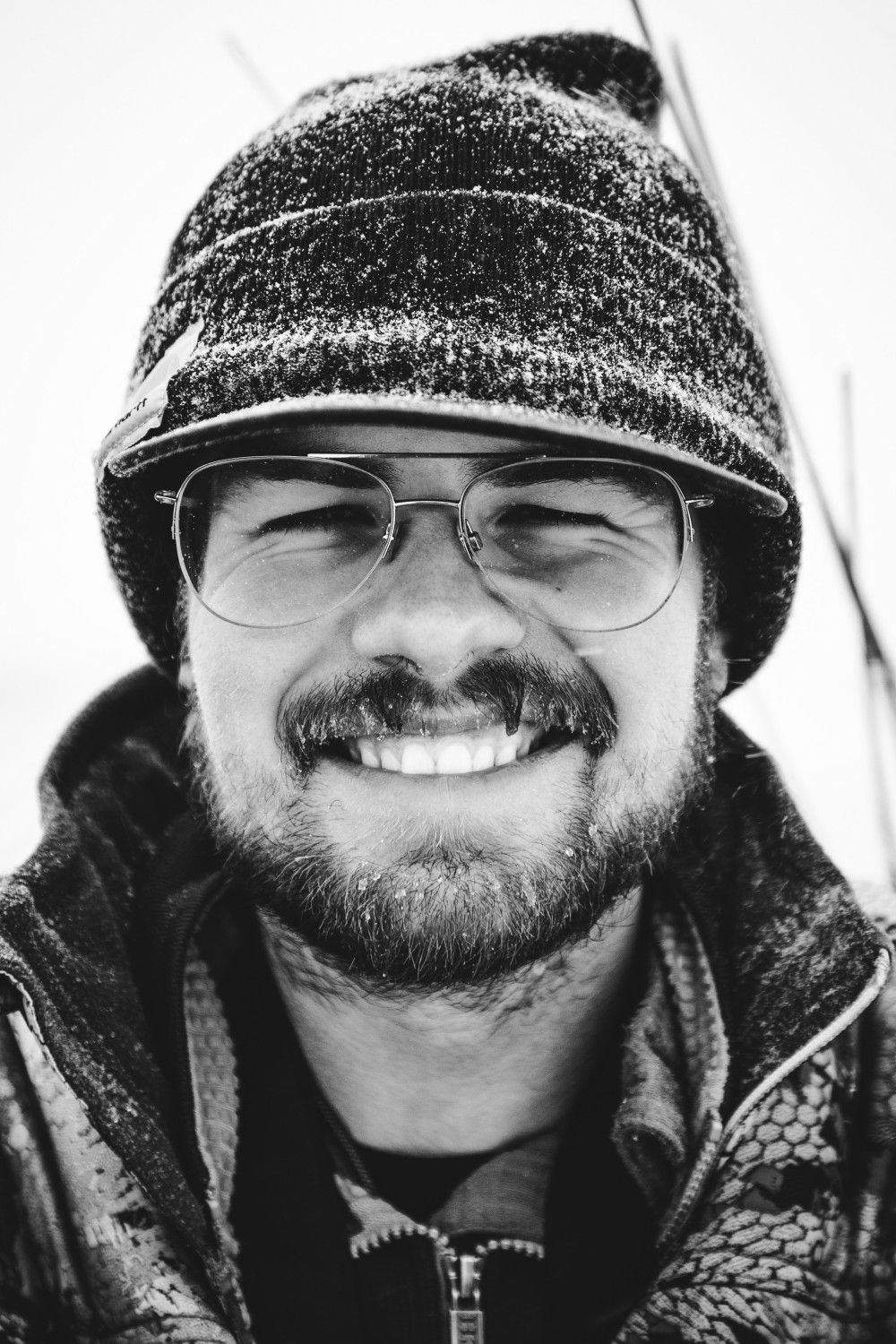
For this Behind the Guide feature, we sat down with guide & photographer Seth Vanderband. Seth was introduced to waterfowl hunting and photography at a young age. Spending most of his Fall/Winter days in the field hunting and guiding, Seth is also well-known in the waterfowl photography space for his keen eye and signature moody style.
Split Reed: Who are you, and what do you do?
“My name is Seth Vanderband. I’m a hunting guide, and I own a hunting outfitter. I guide goose, duck, turkey, and crane hunts all across the US. North Dakota, South Dakota, Michigan, Arkansas and Texas. That’s basically all I do. That’s my life–250-plus days out of the year, I’m hunting in the field. I own Three Hills Outfitters in Michigan, where we do goose, turkey, and duck hunts. We also partner with Dry Creek Outfitters in Texas to offer turkey hunts down in Wichita Falls. That’s basically been the last six years of my life, and I’m blessed and thankful to be able to be able to do what I do.”

Split Reed: Did you grow up with a hunting background?
“I grew up surrounded by the outdoors. It all began growing up in a deer hunting family. My family didn’t really hunt waterfowl at all, honestly. But since I was old enough for my dad to put me in his backpack, he would take me out into the deer woods. I would say I was probably 15 or 16 when I waterfowl hunted for the first time. I didn’t know anything about it; I just had some buddies that had been before, and it looked like fun. So my younger brother and I went out into my parent’s backyard with some homemade goose decoys and homemade goose blinds–homemade layout blinds–that were made out of plywood. I mean, they were literally a coffin. We just piled corn stubble on top of them, and I shot my first goose. The gun fell apart in my hands–an old break barrel 12 gauge–and that was it. I was hooked. I’ve been doing it ever since. I got into guiding two years after that, more on the media side of it initially, and then it slowly transitioned into just guiding full-time, or, I guess, as full-time as you can get with it anyways. If hunting seasons here, I’m hunting.”
Split Reed: From the moment you started to love waterfowl hunting, what were the formative steps that got you in the headspace that you might want to do this for a career?
“It happened pretty organically for me. I just didn’t really know what I wanted to do with my life. I was big into media and photography, and so, you know, what am I doing? What am I spending my time doing? Well, let me go shoot photos of my life. And my life at that time was just duck hunting. I started working in North Dakota. I came out originally as a media guy, but I pretty quickly realized that it’s much more fun to be behind a gun than it is to be behind a camera. At least for me.”

Split Reed: What was your introduction to photography?
“I’ve always had some sort of an interest in it. That’s what I went to school for graphic design, photography, and multimedia. That was my goal through high school. I thought I would be a graphic designer, photographer, videographer, writer, etc. I was more into the creative fields. And then it turned into what it is now, pretty quick. Originally, I had no plans to work in the outdoor industry at all. It was a pipe dream. You know, 10-year-old me, thinking someday I’d love to be a guide or something like that. But it didn’t seem like a realistic goal, and then, as I got more and more into it through media, I realized that it was super achievable. If you’re willing to work hard and give a pretty big chunk of your life to it, just about anybody can do it.”
Seth’s Photography


Split Reed: What was your introduction to Browning shotguns?
“My first semi-automatic gun, like my first real gun, was a Browning A5 that I bought. I still have that gun; it’s actually sitting in the back seat of my pickup, and I still use it all the time. I’ve beat the crap out of that gun. I have cases on cases on cases, probably hundreds of cases through that gun, and it’s never stopped ticking, so I’ve stuck with Browning. I have two A5s now, and then I have a Maxus, which I also really like.”

Split Reed: What is one of your favorite hunting memories with a Browning gun?
“My favorite memory would have to be the first time I got that A5. I bought it in January, and that was when I made my first trip down to Arkansas. My first hunt with it was the first time I’d ever done public timber in Arkansas. That A5 had the bottomland pattern on it, and I just really felt like I fit the part, you know? I got my new cool gun, I’m out here in the timber, and we’re talking mallards down through the trees. I felt like I was just the king, as a 17-year-old eager to explore new hunting.”

Split Reed: What do you look for in the performance of your shotguns?
“As a hunting guide, you’re not necessarily known for taking the best care of your stuff. And when you’re hunting every day, and you have a busy schedule, like, right now, we’re hunting ducks twice a day. So I don’t have a lot of free time. I’m not exactly treating my gear or my guns the best always. Half the time, they’re rattling around loose in the truck. So they need to be able to handle some serious abuse, and they need to be able to run even when they’re dirty. I’ve used that A5 in brutal minus 20-degree weather all the way up to 90 degrees and everywhere in between. I’ve used it soaking wet, frozen, dry, full of sand, mud, everything, and it just keeps kicking. Every once in a while, I hit it with a power washer or something like that, but it’s just been nothing but reliable.”
Split Reed: In your own words, how would you describe the relationship between a waterfowl hunter and their shotgun?
“This is what I shoot ducks with. This is a tool. It’s just like how a carpenter has his hammer or a saw. A shotgun is our tool. So you need something that keeps kicking no matter what, no matter the conditions, no matter the weather. And those A5s have done that for me.”
Split Reed: As a guide is there any piece of advice you’d want to share with the waterfowl hunters?
“I think as a whole, whether you’re a guide or just a hunter, anymore, it’s so easy to get caught up in social media, and the numbers and the piles, and that’s not what it’s about. People get distracted by that. So, one thing that I would tell people is probably just to focus on your “why.” Why did you start hunting? What did you start doing this for? Are you in this for some social media clout, followers, and numbers? Or are you in it because you love it? That’s the one thing that I would ask everybody to ask themselves. Make sure you’re in it for the right reasons.”

Split Reed: How has photography changed the way you see hunting?
“I don’t know that I’ve necessarily picked up anything just from photography, but the places that a camera has taken me are incredible. I don’t know that I would have been able to see the things, go to the places, or make the connections that I have without a camera. I wouldn’t be here today in North Dakota running duck hunts if it wasn’t for that first crappy camera that I got. It got me hired, got my foot in the door, and allowed me to meet the right people. You meet a lot of different people, even when you’re just shooting photos and traveling. So you get to learn a lot you get to see their different styles and ways of hunting.”
Split Reed: As a photographer you’ve worked on Browning shoots in the past. What is one of your favorite images you’ve shot for Browning Firearms?
“There was one in particular that was a late season freezing cold hunt. I think we had three or four different guys that were shooting Brownings, and we set up on this late season honker feed. It was negative, 20 degrees out, and the geese were flying at one o’clock in the afternoon; it was just ice cold. There was a big group of about 20-30 honkers that were backpedaling in front of the decoys, and I was set up 20 yards behind the blind. I shot a photo of them sitting up out of their blinds. That was a pretty cool one. Back home in Michigan, we had a shoot on really tiny water late in the season. I wouldn’t say it was in the timber, but it was a creek that was running through trees. So, you know, as close to timber as you can get Michigan. I shot a photo right at first light of a single Mallard coming down through the trees over somebody’s shoulder. And that was a pretty cool one as well.”

Split Reed: Why do you continue to pick up the camera on hunts?
“For me, it’s more for personal reasons, like, if there’s a hunt that I really enjoy or if there’s something that I really want to get. I would say that it’s more so for me to preserve that memory with buddies, whether it’s a pile of birds or just a picture of my dog. My dog’s getting up there in age, so I want to make sure that I get as many pictures as possible. So, stuff like that, I would say. It is definitely more for selfish reasons than anything else. I just want to have that for me because 10-20 years from now, I want to be able to hang that stuff up on the wall and be able to look back at it. It’s one thing to go shoot a photo with your phone, but that just gets lost. There’s something different about taking the time to make a nice photo, print it out, and put it on the wall. It lasts a lot longer.”
Split Reed: As waterfowl hunters, we are all big gear junkies, and we love to go back and forth with each other about what we like and what we don’t like when it comes to gear. I think this is very true, especially when it comes to shotguns. Based on your experience, if someone came to you debating on pulling the trigger on a Browning versus a different brand of shotgun, what would you tell them?
“There’s three things that everybody’s looking for when they buy a shotgun, or at least they should be. Number one is, how does it fit you? When you put that gun to your shoulder, how does it feel to you? Are you comfortable shooting it? The nice thing about Browning is they have a bunch of different options for everybody. They have the Maxus, they have the A5, over-and-unders, etc. If your eye fits one or the other better, you’ve got some different directions that you can go. The second thing is a gun that’s super reliable. All the Brownings that I’ve shot have been incredibly reliable over years of abuse. They’re not babied; they’re abused. The third thing is finding something you enjoy shooting and like looking at. With Browning, they’ve got so many cool camos and patterns to choose from and all sorts of configurations.”
