


Our Behind the Guide Series is a chance to take a deeper look at waterfowl guides from across the country whose passion for this lifestyle is unrivaled, unbroken, and downright obsessive. Each of these guides also carries with them a tool. One that many would also consider unrivaled, regardless of the model, color, pattern, or age. A Browning shotgun. Browning Firearms has been around since the late 1800s, and over the course of that time, their firearms have been the top pick for hunters in many pursuits. Including their shotguns among many waterfowl hunters. From the prairies of Canada to the timber of Arkansas, guides and hunters alike have relied upon & trusted the famed ‘golden trigger’ season after season.
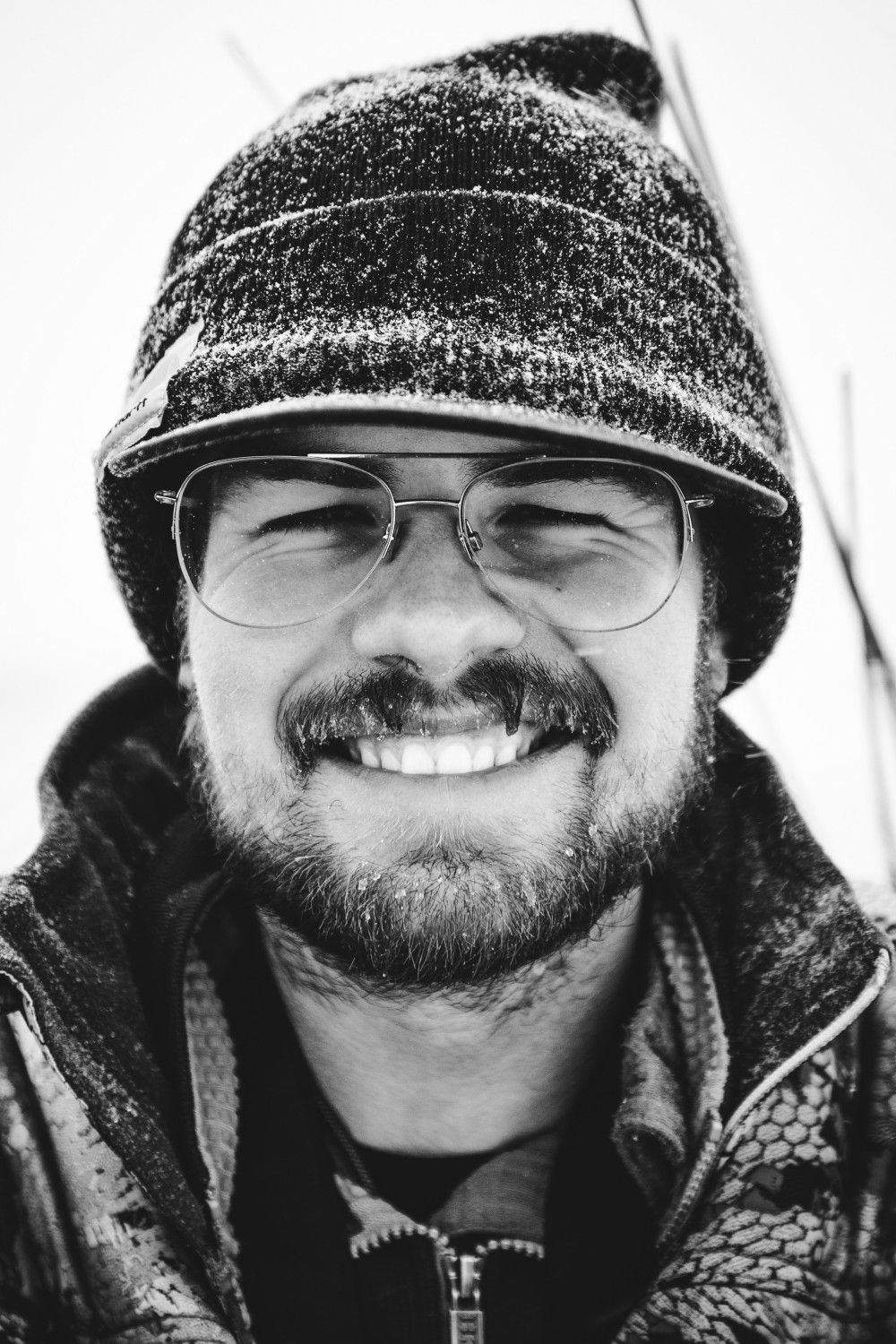
We’re back with our last Behind the Guide Series for this season. This time, we’re sitting down with Trevor Austin, a Washington native, call maker, and guide. To learn more about Trevor and his journey in the waterfowl world we talk about the origin story of Pacific Calls, his introduction to guiding and hunting big geese in Montana with his favorite Browning 16 gauge.
Split Reed: Who are you, and what do you do?
Trevor: “My name is Trevor Austin, and I was born and raised in Seattle, Washington. Growing up, I played baseball and have hunted my entire life. That kind of drove my passions in life. My dad was a small-time outfitter down in southern Washington, so I grew up chasing geese with him, and once I got done with high school, I moved over to Spokane and started playing baseball at the community college here in town. I made it about one whole year. It just wasn’t for me anymore. It had turned into too much of a commitment. In college there are a lot of things you want to go and do, and one of them for me was to hunt as much as possible. If you come from an area like I came from, you can’t just walk out the door and go hunt five minutes down the road to hunt. It’s an hour to two-hour drive. I was kind of mesmerized when I moved over here because of how easy and accessible hunting was.

I started making calls with a buddy of mine who was also a baseball player at the community college after our first year playing together. He graduated, but I had one more year left at community college, and we kept hunting almost every single day together. My grades started getting a little low, I didn’t make it to class all the time, but we had some incredible shoots and just had a blast chasing birds freely. In the middle of all of that, my buddy’s father started showing us how to make a duck call barrel, and that was what sprung the interest in call making in our heads. Like-hey, we can do the same thing-we can shove someone’s insert into a barrel and say we’re making duck calls. So anyway, we started making duck calls in 2009 and officially launched our business, Pacific Calls. Over the years, I have also become a guide working for a company out of Moses Lake called Honkstomper Guide Service.”
Split Reed: How did you find yourself on the path to becoming a call maker?
Trevor: “It was honestly a big passion from the get-go. I always wanted to either make it in the MLB or be a professional in the hunting industry in some fashion or another. When my buddy’s dad showed us what we could do on a lathe, we had a lot of family and friends who started supporting us in our call making journey. That was when the trickle effect began. We thought, ‘We’re selling five calls a month right now. We can cover our beer, this is awesome!’ This is what I needed in life.

Once I graduated from college, I teamed up with Alex Yergas in 2011. He was new in the hunting world, but he was all in and had some awesome ideas. I graduated from college with a business degree at that point and I knew how to start a business, knew how to sign up for an LLC. Those aren’t crazy hard things to do, but back in the day, the thought of all of that was mind-blowing.
Alex knew a lot, and he brought in a lot with it. There was a little bit more fire that I could feel from him. We went from making calls in the garage over beers to a true day-to-day operation. We needed to get out of my garage and needed our own machine instead of paying someone else to manufacture parts.
When I graduated, I started working for my parents, who were irrigation contractors. We were doing development, residential, and commercial irrigation. It was a family business, so it was there for me to take over, but after I found call making, I knew that was what I was meant to do. I soon moved to Spokane, Washington, and took a job with a different irrigation company to save up and buy the first shop in 2014.
We now had the ability to cut our costs and learn new things in call making and call manufacturing, and we started to figure out what it really takes to build a call. I kind of thought everyone had a machine like this and a laser engraver and was able to go into the shop and make a duck call. Come to find out, there’s actually a pretty big market for other folks that didn’t go buy an expensive piece of equipment and learn how to become a CNC programmer.”
Split Reed: What were the formative steps that got you in the headspace that you might want to also become a guide for a career?
Trevor: “I always wanted to work in the industry and I make calls because I’m a big goose hunter. That is my jam. If I could take in some income at the same time while we’re shooting geese, then sign me up. I started guiding in 2011, the same year I was an official business owner of Pacific Calls (Pacific Custom Calls back then). I met a guy named Austin Sandman in college at Washington State University. His cousin was in my same major and told me I had to connect with him because he was a big goose hunter. It just so happened that I randomly ran into him walking to a bar, and we started chatting. Austin convinced me to go hunting with him and his buddies. So we went for 3 days, and we just absolutely pounded the birds.

I got home the next day, and he called me and said, ‘I have some guys to run on hunts, and they could use some help…what gear do you have?’ I was super fortunate then because my dad had given me one of his spreads that he was leaving over on the west side of the state. I had the gear and the knowledge to go kill geese, and that’s what Austin needed. We were starting to take overflow clients from other outfitters, some people that I knew, people that he knew, and kind of just helped him build his business from 2011 and up. So, I became Austin’s right-hand man and full-time guide in 2013. I guess the steps that led me there were that I was already equipped and ran into the right guy at the right time.”
Split Reed: What has your time as a guide and call maker taught you about yourself or life in general?

Trevor: “I think the biggest thing is just to follow your dreams. I always want to damn near tear up when I think about my past, what I’ve done, and where I’ve come from. I’ve had a great life and a great supporting family, but it was just all the hard-working nights. Working eight or nine hour days on one job and then driving down to the call shop for another three or four hours. Just a lot of hard work and determination. I could see the potential in both, and there were a lot of hard times in relationships, family, and friends, but it all worked out in the end. I think the biggest thing I learned was just follow your dreams and it’ll come together. Meet the right people and get out of your comfort zone, branch out and just meet as many folks as you can to see what opportunities are out there. Put in the work and follow those dreams.”
Split Reed: What Browning shotguns do you hunt with?

Trevor: “I’ve got the 12 gauge Maxus II and the Browning 16 gauge Sweet Sixteen. I’m a big proponent of sub-gauges. My dad was a 12 gauge, three-and-a-half inch, triple BB, shell shooting freak and would never shoot anything else. He thought you just needed to have the biggest thump in your chest whenever you shot. I got sick of it when one company came out with a shell speed of like 1700 FPS or something like that, and it would just rock my shoulder. I finally said–you know what? I don’t think we need to have it like this. I’m becoming a worse shot because if I miss that first shot, I’m already off my pattern, or I’m off my target, and I’m not gonna hit a damn thing. So, 10-12 years ago, I got into sub-gauges. That Sweet Sixteen and the Maxus II were my first Brownings. A buddy of mine actually had the first Maxus, and I loved that gun. I shot that gun a lot whenever I would hunt with him. It felt like I didn’t give him the opportunity to even have a say in it, I’d just take it and leave him my old gun. That Maxus swung so nicely, and it just fit me right out of the box. I didn’t have to do a thing to it.”
Split Reed: What’s your favorite hunting memory that you’ve made in the field with one of your Brownings?

Trevor: “There’s a lot of them because they’re the only two guns I use. I would say the most memorable one was when I took the 16 gauge over to Montana for the first time to shoot really big geese. It’s like their rib cage has an extra rib in it they’re so big. I was actually a little nervous because we were hunting them in January. Those late-season birds are fat, and they’ve got a lot of down built up. Everything on those birds is just thick, you’re shooting greaters out there, and it’s like they’ve got body armor on. It was cold on those hunts, too, probably five degrees, with lots of snow. The first group of honkers, I pulled up on a bird—that first one was pretty close— and smoked that bird. I missed the second shot, swung for the third shot, and poked that bird at probably 45-50 yards. I just looked down at that gun like—holy s***—I just smoked that goose with a 16 gauge! These are the biggest geese you’re really ever gonna see, in my opinion, and it just went stone dead. My dog could barely even pick them up. I had to walk over there and grab it. I picked that sucker up, and I wish I would’ve had a scale because it must have been pushing 15 pounds. It was one of the largest geese I’ve ever shot.”
Split Reed: What are some of the things you look for in the performance of a shotgun?

Trevor: “For me personally, I’m looking for a lighter gun. I don’t want a big, heavy slug of a shotgun to haul around. With the sub-gauges, I don’t really worry about the recoil, so I’m looking for a lighter base shotgun, and I mainly shoot a standard 28-inch barrel. I definitely want something that can take a beating and is durable, too, like the Maxus II and that coating that it has on it. You just can’t beat that stuff. I am so mean to my guns. If you were to watch me and how I handle my guns—cleaning and putting them up—you would probably just go, ‘Oh my God.’ This guy probably doesn’t deserve to have this gun, but they’re my tools, right? They’ve always been my tools, and I gotta have that durability built in for what I need. If they can withstand what I put my shotguns through, then you’ve got me.”
Split Reed: Do you have any shotgun tips to share?
Trevor: “My first pointer is to always have your gun in a waterproof bag when it’s not being used. I developed that habit. in case I do run into water situations. For instance, if we have to change from a field hunt to a water shoot, I need to be ready. A good waterproof case protects my guns and allows it to float. If anything were to happen, I wouldn’t lose my gun.

I also always have a little bit of oil with me. It gets pretty cold out here late season, and that metal on metal can move pretty dang slow. Here in Washington, the central basin region is also known for its sandy dirt. A little bit of oil goes a long way if your action is moving slowly. I’ve been a proponent of not deep cleaning a gun unless it’s having issues. I’d rather leave it until I see an issue then, I’ll strip it down, and I’ll clean it. After the season, I always send it to a gunsmith that lives in my town, and he just sends that thing to rehab and gets it cleaned better than anything I could do.”
Split Reed: As waterfowl hunters, we are all big gear junkies, and we love to go back and forth with each other about what we like and what we don’t like when it comes to gear. I think this is very true, especially when it comes to shotguns. Based on your experience, if someone came to you debating on pulling the trigger on a Browning versus a different brand of shotgun, what would you tell them?

Trevor: “I think what I’d say is I hunt as many days of the year as possible. My Brownings travel to different countries, different states, and different environments and I don’t have issues with them at all. Additionally, with the amount of ammo that goes through these guns, and not ever having to send it into the manufacturer, that is a huge A+ for track record in my book. Dealing with the community & team there at Browning, you know, the last six-ish years has been tremendous. I’m a big person when it comes to knowing who a company is, what they stand for, and how they treat people. For me, if all of that lines up, you’ve got me. Browning shotguns just perform left and right, they fit well and they’re dependable. You can beat the heck out of them. I feel like I could battle a war with them, use them as a boat oar, and then go and kill geese if I needed to.”
Split Reed: What’s one piece of advice you’d like to share with other waterfowl hunters?
Trevor: “Get to know the company that you’re gonna go hunt with, represent, buy from, etc. Just get to know the people behind it. I think that’s the biggest thing. Someone out there could have the worst company logo in the world, but they could be the nicest, kindest, best outfit, call maker, etc. I think everyone just kind of sees what they see on Instagram or social media or an advertisement, but they don’t actually reach out. Go to shows and meet these people. I think that’s where our world has gotten away from. Get out there and meet the folks that you’re buying from and representing, and then be comfortable with the people behind that product.

My number two would be to travel. No matter what, go travel. Travel and hunt. Those are the two best things in the world. I’ve met my closest friends in this business because I’ve been able to travel to different states, countries, expos, and hunts. Through those experiences, you really get to narrow it down to who you want to hang out with. My closest friends, there’s a handful here in Spokane, but my good friends are spread out across the country. I owe that to having all those experiences traveling and meeting people.”
For more of the Behind the Guide series, check out these articles below: