


Turkey calls are synonymous with turkey hunting. The physical interaction between you and a bird is what draws countless hunters to the woods every spring. As a major part of hunting culture, turkey hunting sees its fair share of gear, calls included. There’s no shortage of turkey calls on the market today—box calls, pot calls, diaphragms, and hybrids. It can be confusing, particularly if you’re relatively new to the turkey hunting game. To sort through all the noise, pun intended, we tested all types of calls from different manufacturers to find the best turkey calls of 2025.
Best Turkey Calls of 2025
- Slayer Calls Crystal Queen
- Bill Saunders Two-Sider
- Quaker Boy Hevy-Hand Box Call
- DJ Calls MTC-10 Mackinaw Box Call
- KLUK Custom Calls Wingman Starter Package
- Power Calls Beau Brooks Signature Series-Pro Pack
Crystal Queen

Pros:
- Great looking call
- Crisp sounds work great in the wind and at a distance
- Sized well for most hands
Cons:
- Condition this call consistently for the best sound
A relative newcomer to the outdoor scene, Idaho-based Slayer Calls hit the ground running in 2014, introducing outstanding elk and waterfowl call lines to the hunting public. Today, they’ve expanded their offerings to include a full range of both friction and mouth turkey calls that feature one of their latest, the Crystal Queen pot call.
Yeah, I understand ‘pretty’ doesn’t kill gobblers, but visually, the Crystal Queen is an attractive call. The ultra-clear glass calling surface overlays a laser-etched sound board sporting silhouettes of a bull elk, flushing mallards, and a struttin’ gobbler, along with the SLAYER name. The glass sits in a nicely finished walnut pot, itself etched on the bottom in a mirror image of that on the sound board. This is a mid-range call, size-wise, measuring 3.75” across the flat and weighing a slight 3.28 ounces; big enough to fit comfortably in your hand, but not so big (like some pots) as to prove awkward.
There’s nothing ‘non-traditional’ about running the Crystal Queen. With experience, a caller can quickly master the basic language, i.e., yelps, purrs, clucks, and hard-edged cutts. The crisp, clear sound has no issues with wind or at a distance. One thing to note is to condition the call. I’d suggest a stone, especially on a brand-new call. And two, the hard crystal surface and the included composite or laminate striker make for a touchy combination; that is, it’s easy to ‘skip’ the striker, resulting in squeaks, squawks, and other unwanted noises. Practice. Conditioning. And more practice can help.
Two-Sider

Pros:
- Two-sided call is versatile
- Purple heart wood has a great sound
- Comes with two strikers
Cons:
- Two-sided calls sacrifice a little sound quality compared to their single-sided counterparts
I’ve been a huge fan of Saunders’ waterfowl calls, e.g. the Clutch single reed and the Triple B short reed hang on my working field lanyard daily, for some time now. But it’s only recently that I’ve discovered the Washington call-maker’s turkey line.
Saunders’ Two-Sider pot call gives you the best of both worlds—clear, far-reaching crystal and soft, mellow slate—in one unique package. As you might guess by the name, this purpleheart pot holds both a crystal calling surface and a slate surface on opposite faces. That means you can reach out and grab that gobbler’s attention with high-pitched yelps and cutts, flip it, and then work him in close with the seductive sounds of slate.
The Two-Sider comes with both a purpleheart and hickory striker, as well as conditioning materials, i.e. sandpaper and a small square of Scotch Brite pad for the softer slate face.
Hevy-Hand Box Call
Pros:
- Easy to make realistic sounds with
- Heavy lid has a great mid-range rasp
- Great for covering distance
Cons:
- Heavy lid is not great for birds in close
Started in 1975 by the late Dick Kirby, a legend in the outdoor world, Quaker Boy produces some of the finest and most traditional game calls available. Today, as it has been since the founder’s passing in 2010, it’s Kirby’s son, Chris, who oversees the day-to-day operation of the New York-based business.
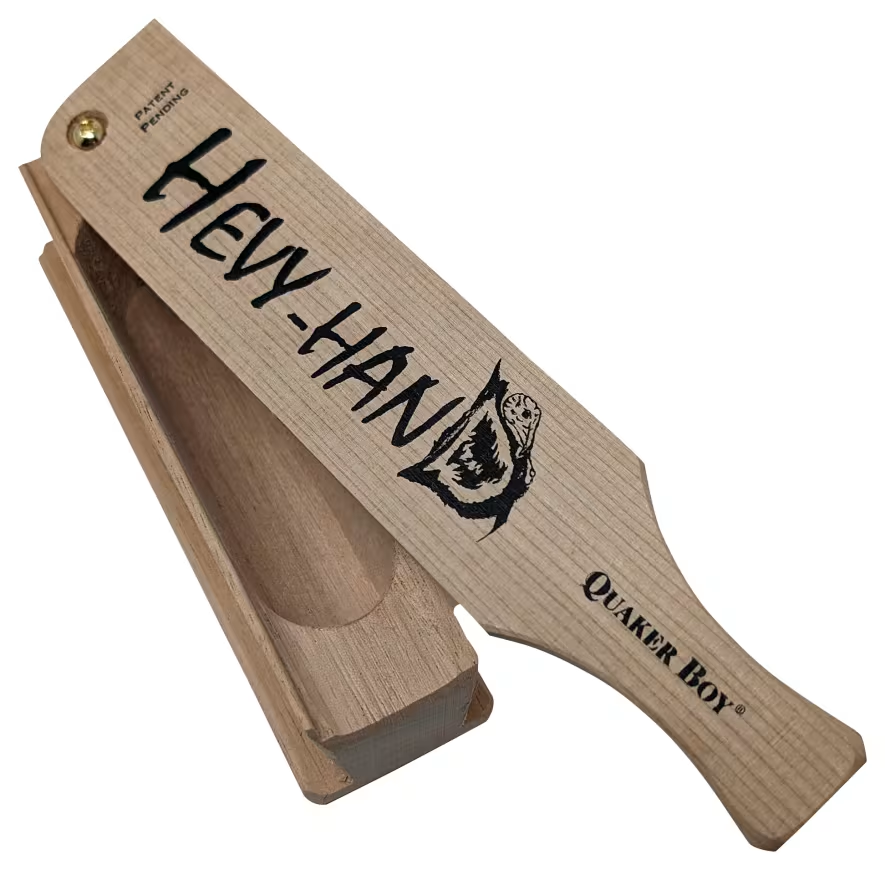
While Quaker Boy prides itself on offering a wide variety of turkey calls ranging from the visually interesting original Boat Paddle to an array of diaphragms, it’s the new Hevy-Hand box call that’s raising even jaded eyebrows. As Kirby explained, the lid on the Hevy-Hand is thicker, thus heavier at the handle, gradually thinning as it gets toward the ‘screw end.’ The design makes for a light, high-pitched start, with a mid-break that practically happens on its own, culminating in a deeper, raspy finish, thanks to the heavy—HEVY—handle.
The Hevy-Hand combines an American cherry lid with a mahogany bottom to create not only excellent turkey sounds, but also serves as a true hand-me-down work of art to last generations.
MTC-10 Mackinaw Box

Pros:
- Simple, elegant design
- Built-in chalk tray
- Great volume
Cons:
- No frills box call
Headquartered now in Afton, Wyoming, David Jackson, the man behind DJ Calls, worked for the P.S. Olt Company for 27 years in their shop in Pekin, Illinois, making, among others, the OLT D-2 duck call, one of the most recognizable ‘fowl calls ever to grace the marsh. In ’03, Jackson bought the Olt molds and has been turning them out, along with his own makes and models, since then.
Sandhill cranes. ‘Coon squallers. Fallow deer grunt tubes and red stag bugles. Jackson’s inventory is multi-faceted, to say the least, and does include a traditional box call in the form of his Mackinaw, or MTC-10. Milled from tried ‘n true American walnut, the MTC-10, from its plain-sided (ungrooved) bottom to its lightly etched lid, epitomizes elegant simplicity. That, and it sounds damn good, with a low raspy yelp and popp’n cutts, along with what I’d call just a slightly oversized handle that makes for a positive grip. And the chalk ‘tray’ that’s been bored into the front of the box? Nice touch, Mr. Jackson.
KLUK Custom Calls’ Wingman Starter Package (klukcustomcalls.com; $35)
Wingman Starter Package

Pros:
- Comes with three stretch models for different sounds
- Great to learn on
- Works great up close
Cons:
- If you don’t like Bat Wing cuts try a different style
I’ll admit I was unfamiliar with Brian Meese’s KLUK Custom Calls until recently, when a turkey hunting acquaintance passed one of his diaphragms along to me, which I immediately took a liking to, as it featured my personal favorite ‘Bat Wing’ top reed design. According to his website, Meese began making calls for himself in 2017, before launching KLUK in 2020, joined forces with a neighbor named Nate Burkhart shortly after, and the business truly began to grow. Today, and in addition to reeds, box, and pot calls, KLUK offers waterfowl calls, owl hooters, crow calls, and coyote reeds.
The Wingman Starter Package, one of nine different multi-call kits featuring my beloved Bat Wing Cut, is a simple triple reed design, with two unaltered bottom reeds and a pink Bat Wing top reed. The kit comes in a low, medium, and high stretch assortment, providing versatility for experienced callers and a ‘Which one works best for me?’ menu, per se, for those new to mouth calls. If you’re looking for more, KLUK has them, including packages designed with Ghost Cuts, Modified Ghost Cuts, and Combo Cuts. For $35, it’s hard to go wrong here.
Power Calls Beau Brooks Signature Series-Pro Pack
Beau Brooks Signature Series-Pro Pack

Pros:
- Versatile call pack
- Great sound range
- Can make gobbles with practice
Cons:
- Takes practice to sound like Beau Brooks
If you keep up with any turkey videos, there’s a good chance you’ve seen Beau Brooks expertly mimic hens and gobblers with a simple mouth call. He’s able to make yelps, clucks, purrs, gobbles, and more with his unique style of calling. Now, thanks to Power Calls, these mouth calls are available to the turkey hunting community.
While it may take some practice to sound like Beau, this three-pack gives you all the essentials to make the various sounds you see in his videos. Each call features a different cut, creating a different sound. The Batwing is an excellent do-it-all call, while Mockingbird is designed for front-end yelping. Lastly, the Cutter makes raspy cuts and yelps and can even be used for Beau’s signature gobble.
Final Thoughts:
Turkey calling is an art form, dissecting their language and responding in a cunning way to fool them. Everyone calls a turkey differently, and everyone has their own preferences. This list features a variety of box, slate, and mouth calls we tested this year. They offer a wide range of sound profiles and something for every scenario and caller. That said, do your research and try calls when you can to find what fits your calling style best.

