

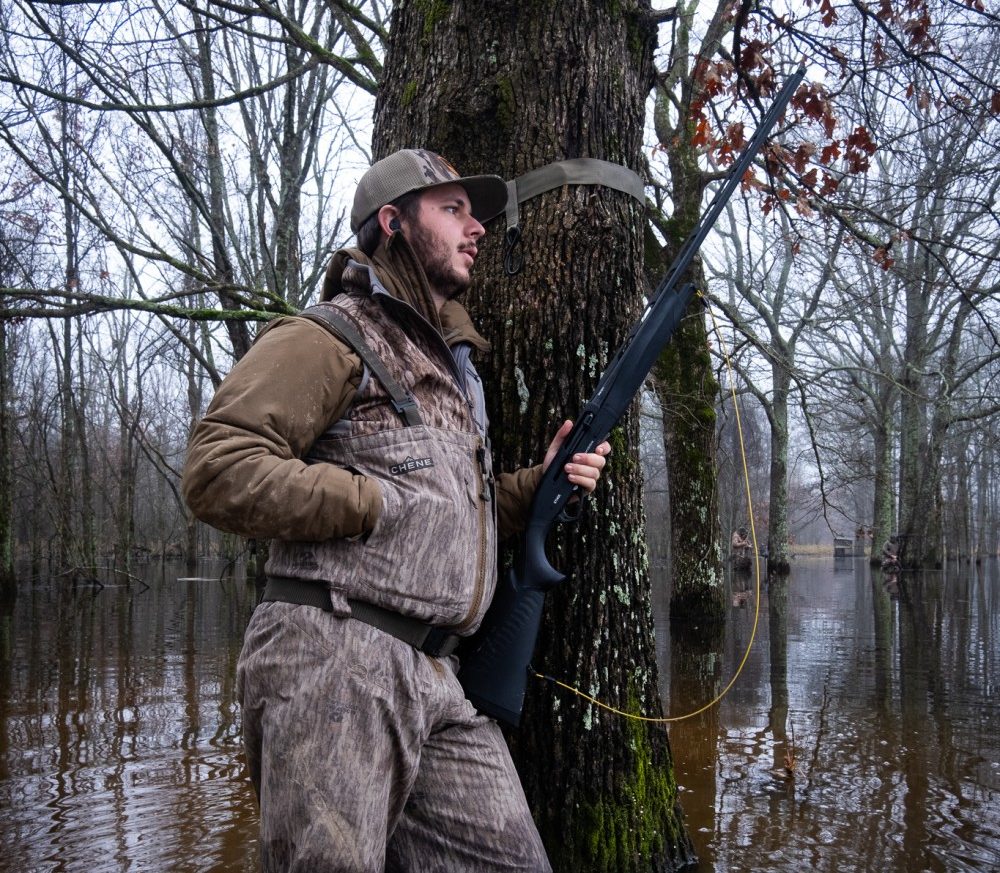

Duck boats are a pivotal tool of the trade. They open up access to new water and allow hunters to get off the beaten path and away from crowds. While a duck boat is a great tool for waterfowlers, like any boat, it deserves its fair share of respect. Hunting from a boat, especially in the late months of the season, can be dangerous. Water temperatures are just above freezing, and river currents can turn deadly in a split second. In an effort to keep hunters safe this season, we’ve teamed up with Excel Boats to bring you five boat safety essentials that every hunter should practice religiously.

1. Wear Your Kill Switch
If you’re operating any boat, you should wear a kill switch. This holds especially true when duck hunting. Rough water, hidden logs, and shallow water can turn a simple run in the marsh into an emergency in a second. Hitting an obstruction in the water, especially when standing, can throw you off balance and out of the boat. If you’re not wearing a kill switch, you’re stuck with a runaway boat, and in the worst case, a prop strike. Clipping your kill switch to your waders takes two seconds, and that short amount of time can save your life. A duck boat is also no small investment, so wearing a kill switch to prevent a runaway boat is an obvious choice.

2. Create and Share Your Float Plan
Float plans are often overlooked in the chaos of duck hunting, but having one in place can save your life. A float plan is simply a plan of where you’re launching your boat and where you’re going to hunt. Lots of things can go wrong out on the water, like a mud motor breaking down, leaving you stranded. Without service, a float plan left with a trusted individual could be the only source of help. This vital information can steer your buddies, or in the worst case, search and rescue, in the right direction.
Also, if you’re hunting a new area, don’t go in the dark for the first time. Pre-scout the water, know your route, and make sure your boat can make it through any shallow areas.

3. Wear a Life Jacket
While life jackets may not look cool and might not be the most comfortable thing to wear, they’ll save your life. Every year, a hunter drowns while duck hunting because they are not wearing a life jacket. Get one that fits properly and is properly rated to keep you afloat in case you get ejected from the boat. If you opt for an inflatable life jacket, make sure you service it before each season. Replace the CO2 canister so it goes off if you fall in. Another pro tip is to clip a whistle to your life jacket. If you fall in, the whistle can signal others that you need help.

4. Carry a Trauma Kit and Safety Equipment
In case something goes wrong, having the proper safety equipment is essential. An adequate safety equipment list consists of a trauma kit, flares, extra fuel, and a knife or multi-tool. Rather than just a first-aid kit, a trauma kit includes supplies to treat severe wounds. Whether that’s a gunshot wound, a prop strike, or any other injury, a trauma kit has the essentials to treat people in an emergency until further help can arrive.
Other safety equipment, like flares, allows you to signal your location to others when you need help. Extra fuel can get you back to the ramp in a pinch, and a knife or multi-tool is always a good thing to have. It’s also wise to carry a small tool kit, in case your boat breaks down. Some basic mechanical knowledge and a tool kit can get your motor back up and running. It also doesn’t hurt to carry some extra parts and pieces like prop pins or a plug should the need arise.
5. Exercise Caution When Wearing Waders
Waders are an essential piece of duck hunting gear, but wearing them while driving a boat can be deadly if you aren’t practicing proper wader safety. For starters, always wear a wading belt and make sure it is snug. Wading belts are designed to help trap air beneath the belt in case you fall in. This can be a lifesaver, keeping you afloat and preventing your waders from filling with water. With that, make sure you have a life jacket on. Combining the two will help keep you from sinking until you can get help or float to shore. If you fall in, know the wader safety position. This position involves tucking your knees close to your body to trap additional air in your legs and help keep you afloat.
Final Thoughts

As waterfowlers, we love our duck boats, and for good reason; they’re fast, fun, and get us to the areas we want to hunt. That being said, they can also be dangerous if you don’t properly prepare and exercise caution. These five boat safety essentials can help keep you safe in practically every duck hunting scenario that you and your trusty duck boat find yourself in. Learn these and live by them, to ensure every duck hunting trip is safe and fun. If you’re thinking about hopping into a new boat this duck season, or if you’re looking for accessories to level up your set up, we highly recommend visiting Excel Boats for all your duck boat needs.