

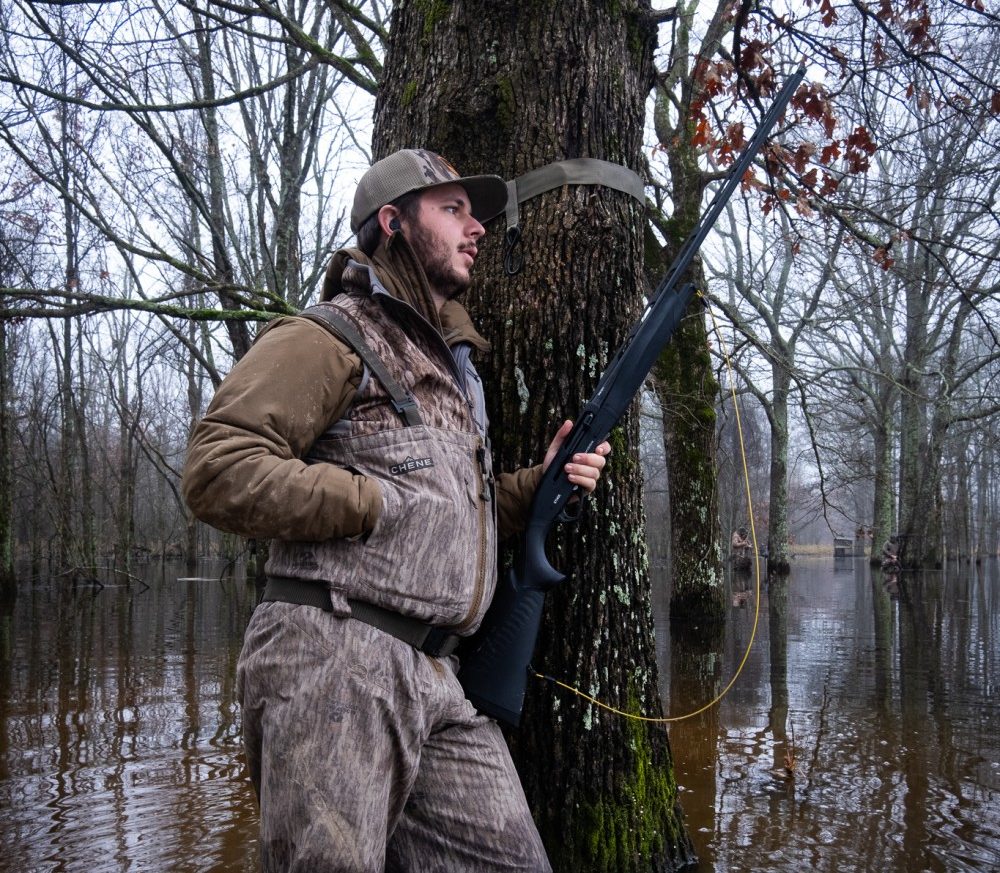

Freelance waterfowl hunting is some of the most rewarding DIY hunting you can do—no guides, no leases, just the open road and knocking on doors for permission. If you’ve ever thought about taking a freelance hunting trip, do it; it’s an experience you and a few friends will cherish for years to come. Logistically speaking, freelance hunting can seem daunting. Dialing in gear, your rig, and where to start are the biggest challenges. Over the years, we’ve dialed in our setup to just the necessities. From rigs to gear and essentials a first-timer may overlook, these are our freelance duck hunting essentials.
The Rig

When you’re freelance duck hunting, you never know where the road may take you. A simple look at a map may reveal likely fields or water that will hold birds, but rarely does that pan out. Successful scouting means covering ground and lots of it—it’s not uncommon to travel 100+ miles in a day. Roadside motels become the norm, and sleeping in the truck is not uncommon.
For that reason, we opted to build our rig with a Super Pacific X1 Camper. This truck bed camper serves a dual purpose: first, it provides a place to sleep, and second, it offers added storage for our hunting gear. The pop-up camper is easy and quick to set up, allowing us to pitch camp just about anywhere. When you’re in unfamiliar country, the X1 camper allows us to avoid sketchy motels and camp close to the feeds we plan on hunting in the morning.
During late-season freelance hunts, when the thermometer drops, camping on the road can be cold. Luckily, Super Pacific over-engineered their campers for just that scenario. Our camper features its propane heater as well as the insulation kit. Combined, we’ve slept in temperatures well below freezing, including a few weather days where temperatures dropped into the single digits.
Trailer or No Trailer?
Generally speaking, most freelance hunters choose to bring a decoy trailer. This allows you to bring multiple blinds, decoy spreads, and whatever other essential gear you may need for a hunt. But trailers are expensive, and filling them with decoys adds up quickly. If you don’t have a trailer, that’s okay. Simplifying your gear to the essentials can turn any truck into a ready-to-go freelance hunting rig.

Rather than bringing dozens of full body decoys, bring a mix of silhouettes, full bodies, and some lightweight floaters. This will cover all your bases and allow you to pack them in the truck with room to spare. Instead of an A-frame or layout blinds, pack backboards and ghillie blankets. Smart packing decisions, like these, will allow you to be successful with just a truck, saving you the hassle of dragging a trailer everywhere.
Decoy Spreads
The beauty of freelance hunting is you never know exactly what you’ll find. Time spent scouting on the road could reveal a small waterfowl mallard shoot or a full-on duck and goose field feed. Ultimately, where and when you plan on hunting will sway your decisions on what decoys to bring. That said, there are some decoys we’ll never leave home without.

One decoy that always makes the cut for freelance hunting is spinners. A handful of spinning wing decoys can draw ducks from a ways out. Particularly, we like the Lucky Duck XHDI. This motion decoy, when turned off, stops with the dark side of the wing up every time. For mixed feeds of ducks and geese, this is crucial to not flare geese.
The rest of our freelance decoy spread consists of a dozen mallard floaters, full body geese and mallards, and silhouettes. For floaters, we pack Heyday’s foam decoys. They’re lightweight and can take shot without filling with water. Lastly, for silos and full bodies, bring a mix of ducks and geese. We generally pack ducks first, followed by as many goose decoys as we can fit. If you’re limited on space and need to choose between species, always opt for mallards. You can decoy any ducks to mallards, and they are the most common species you’ll encounter.
Essential Gear

Once you have your rig and decoy spreads dialed in, comes the rest of the freelance hunting essentials. Below is a list of key gear that makes the cut every year.
Portable Stove
A Jet Boil or similar portable stove allows us to make coffee or freeze-dried meals wherever we may end up hunting. Best of all, it takes up a fraction of the space compared to a traditional stove. Standard butane cans will typically last a week or more of use, plenty for most freelance trips.
Cooler

A good cooler like a Grizzly or Yeti is essential for any hunting trip, especially freelancing. They allow us to keep food and drinks cold, and double as cold storage for birds we shoot. If you really want to maximize space, electric coolers like those made by Dometic chill your food without the need for ice. This creates more cold storage for more food, drinks, or birds.
Hunt E-Maps

OnX Hunt is a mobile hunting app that has changed the game for traveling hunters. You can view accurate satellite imagery, landowner information, and even recent imagery to view water levels or recently cut fields. Just make sure you have the Elite version to gain access to all the states you plan on freelancing.
Sleeping Bag
Our truck camping setup would not be complete without a quality sleeping bag. For that, we rely on Stone Glacier’s Chilkoot 15-degree bag. Stone Glacier builds its products for extreme backcountry hunts, so it’s no surprise these bags can handle a night sleeping in the truck. They are warm, fairly spacious for a mummy bag, and pack down incredibly small for easy storage.
Gun Cleaning Kit
An often overlooked but incredibly important piece of gear to pack is a gun cleaning kit. If you run into gun issues in the field, chances are a cleaning kit will solve 90% of your issues. There are lots of great kits out there, but the Orvis Upland Kit comes with everything we need to service 12 and 20-gauge shotguns. Pair it with the roll-out cleaning station for an all-in-one mobile cleaning station.
Recovery Boards

Freelance hunting can take you to some sketchy roads and muddy fields. If you’re by yourself, a pair of recovery tracks is a smart thing to pack. The ARB Tred Recovery tracks are made from a flexible and durable nylon material. The aggressive tread on these boards allows you to gain traction in mud, snow, and sand to get to solid ground if you become stuck.
Portable Power Bank
Keeping essentials powered and charged on the road is always an issue. The best solution we found is Goal Zero’s Power Bank. This crucial piece of gear lets us charge phones, headlamps, spinners, and any other electronics we need. The power bank can also be charged from your truck when driving.
First Aid and Trauma Kit
When you’re away from service and help, carrying a trauma kit is wise. We prefer a kit that includes a tourniquet, QuickClot, and wound packing supplies. While the hope is we’ll never have to use this, it’s important always to have one for an emergency. The same goes for a dog first aid kit if your pup will be joining you.
Leather Gloves
One piece of gear you never realize how much you use until you forget it is a pair of leather gloves. For that reason, we recommend bringing two pairs of leather gloves. These are great for setting decoy spreads, grassing blinds, and keeping your hands warm on those chilly mornings.
Hit the Road

Freelancing hunting is some of the most exciting and rewarding DIY hunting waterfowlers can experience. The work you put into freelancing directly translates to the quality of your hunts. That said, coming prepared will make the entire experience much smoother. This guide to freelance duck hunting will help you dial in your rig and the gear needed to be successful this season.