

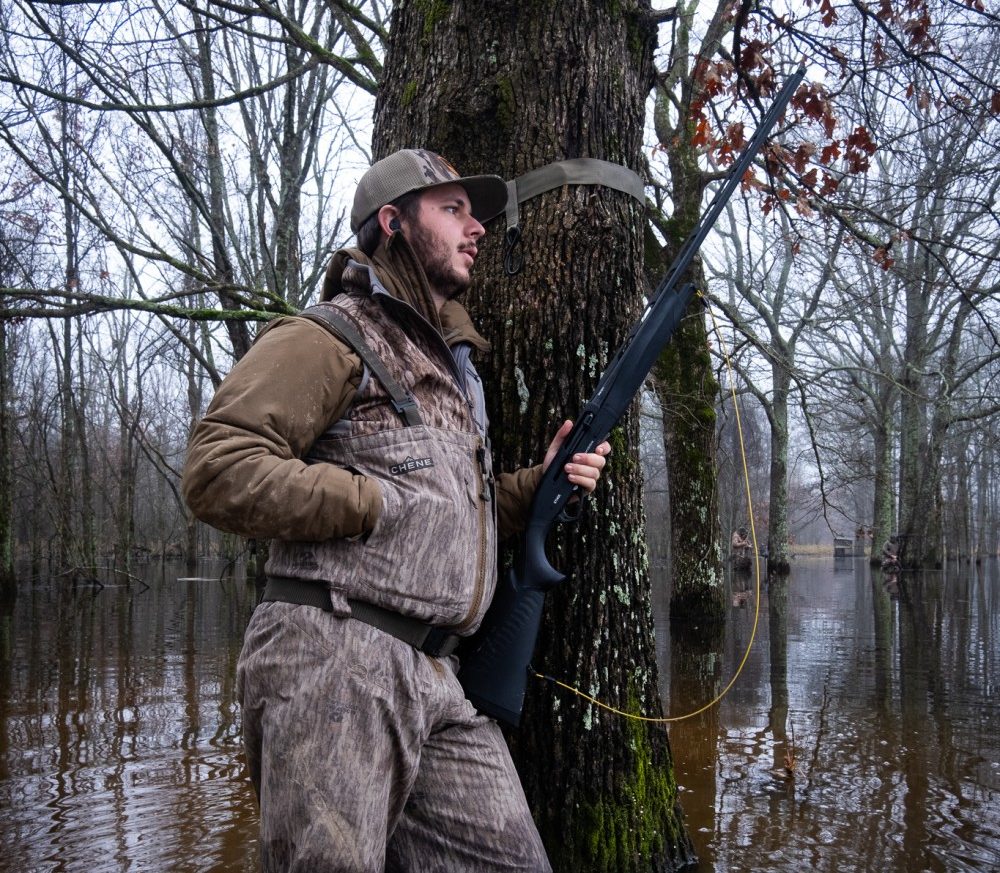

Of the four major turkey subspecies, the Osceola is the hardest to kill. Many factors affect hunter success chasing these birds, but the biggest is their distribution. The Osceola subspecies is limited to just one state. For hunters looking to complete their slam, it means traveling to the Sunshine State in search of this elusive bird. But just because you make it to Florida doesn’t mean you’ll be hunting Osceolas. In parts of the state, the Eastern turkey is the predominant subspecies. That being said, if you’re traveling all the way to Florida in search of a pure Osceola, it’s important to know where to start. In this article, we’ll explore what classifies a pure Osceola and where to find them.
Osceola Turkeys
The Osceola subspecies of turkey was officially recognized in 1890 by ornithologist W.E.D. Scott. He named the subspecies after Chief Osceola, a prolific Seminole chief in Florida. The Osceola subspecies is the most geographically isolated bird of all subspecies. It’s found only in the hot and humid climates of Florida and was never reintroduced to other regions, like Merriam’s, Rios, and Easterns. They inhabit pine flatwoods, swamps, and hammocks throughout much of the Southern tier of Florida.

Osceolas are often mistaken for their Eastern cousins at first glance. However, to the trained eye, they are easily distinguishable with a few key characteristics. A pure Osceola will be smaller than an Eastern, with full-grown gobblers reaching 15 to 20 pounds. Osceolas also have noticeably longer legs than Easterns, with long, sharp spurs. Their beards also rarely get as long as an Eastern’s. The last and most reliable way to distinguish the two species is by the flight wing feather bars. Easterns have distinct white bars on their wings, whereas Osceolas have darker wings with broken white barring.
Where to Find Pure Osceolas
According to the Florida Fish and Wildlife Commission (FWC) and NWTF, the dividing line between Easterns and Osceolas is a diagonal line between Dixie and Duval counties. Anything south of this line is considered an Osceola, while birds west of this line, into the Panhandle, are considered Easterns. Unfortunately for hunters, wild turkeys pay little attention to this dividing line. Just as western turkey hunters find hybrids, or mutts, so do hunters looking for Osceolas. Outfitters in the northern part of the state also contribute to the confusion, advertising “Osceola” hunts when, in fact, many of the birds are hybrids or Easterns. Now that’s not to say you won’t come across a pure Osceola, but if you’re looking to better your odds, look South.

The state of Florida divides its turkey seasons into a North and South zone. The dividing line for the two seasons is State Road 70. Generally speaking, anything south of 70 is considered by many to be pure Osceola country. Here, the conditions and climate are best suited for the Osceola subspecies, helping maintain their genetic purity. You can also reliably find Osceolas from Orlando south, but there is a chance that hybridization affects some of these birds.
Hunting Osceolas
For hunters looking to check off the Osceola subspecies, Florida has plenty of public and private land options. South and Central Florida are home to plenty of Wildlife Management Areas (WMAs) with Osceolas. Unfortunately, this season, the barriers for nonresident hunters did go up. Nonresidents can no longer hunt spring turkeys with a 10-day hunting license. Rather, they will have to purchase a year hunting license in addition to a turkey stamp, bringing the total to $276.50. In addition, certain WMAs are closed to nonresidents during the first nine days of the zonal seasons. This includes Big Cypress (on the non-quota units only), Herky Huffman/Bull Creek, Jumper Creek, Three Lakes, and J.W. Corbett.
Many of Florida’s best Osceola WMAs also run on a quota system, similar to western big game tags. Every year from November to mid-December, hunters must apply for specific WMA hunts. If you are awarded a quota hunt, you can hunt that particular WMA; if not, you’ll be awarded preference points to boost your odds in next year’s draw. For those who don’t get drawn, there are several WMAs in Osceola territory that are non-quota hunts and open to the general public. If the public land grind isn’t for you, there are plenty of outfitters offering private land Osceola hunts. We recommend booking a hunt in areas south of Orlando for your best chance at harvesting a pure Osceola.
Hunting Osceolas requires a fair bit of patience. They’re notoriously one of the hardest subspecies to harvest, stemming from their ability to go silent as soon as they hit the ground. This can be particularly true in heavily pressured WMAs. Your best bet to harvest an Osceola is to scout hard and find where birds are roosting. The good news is that South Florida is limited in roosting habitat. Look for oak hammocks or tall pines near water, and you’ll likely find Osceolas. Even if the birds go silent on you, stay patient, and there’s a good chance one will eventually show.