

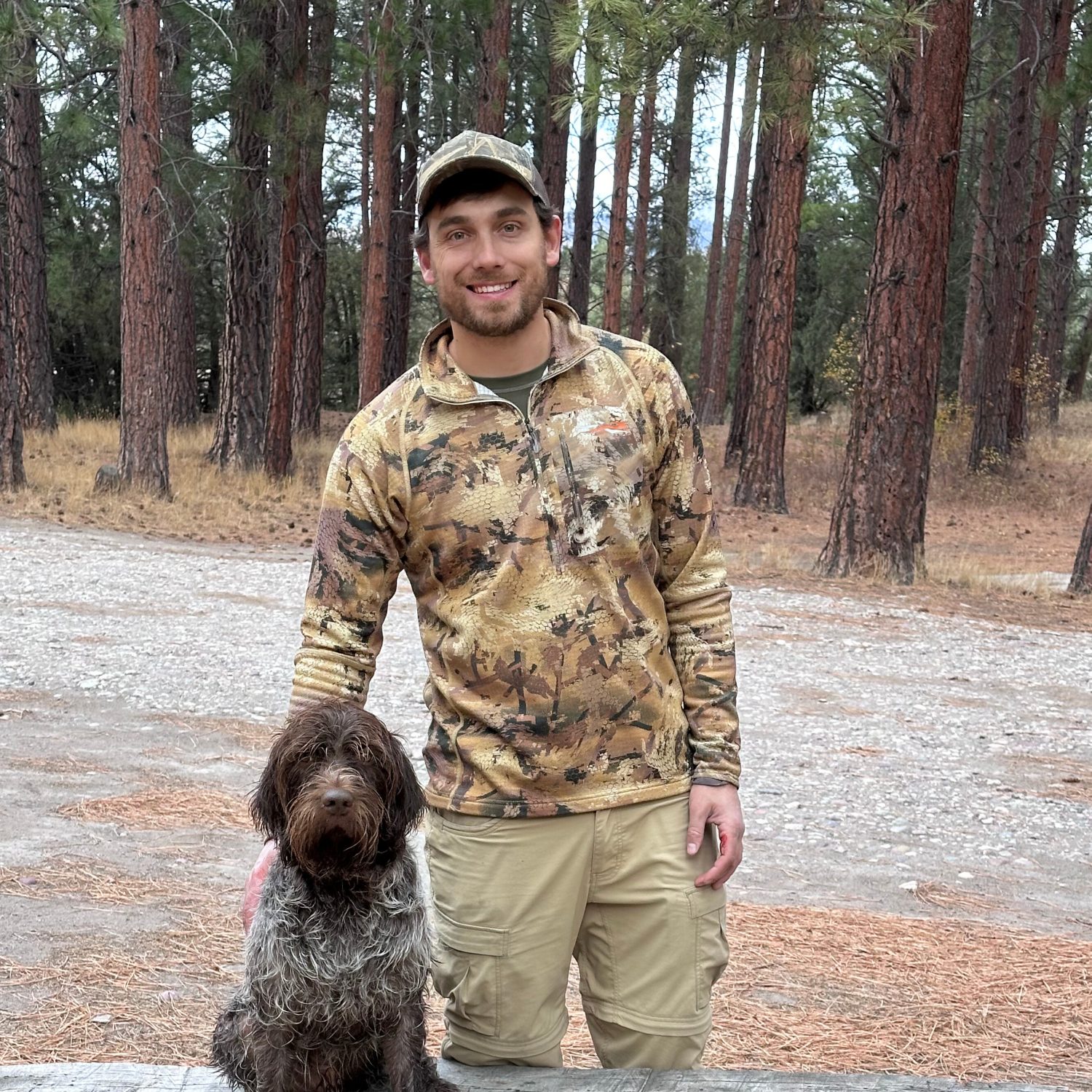

The author with a memorable closing day strap.
The flock of three greenwing teal circled the tule patch and cupped into the decoys from the left. I raised my 20-gauge O/U and dropped one on the first shot, but missed my second shot. Hunting a heavily pressured public refuge in California with two of my best hunting friends, I was grateful for the early morning flight. After all, this was my last hunt of the season. It will be at least eight months before I spend another morning in the marsh decoying ducks.
While closing day doesn’t have as much cachet as opening day, it’s still an important hunt in my book. Opening morning is full of excitement and hope—likely for both a morning of good shooting and a season of it. The closer is something else. And unlike opening day, it’s not always on a weekend day when most people can hunt.
So, I keep a generous definition of the closer, and typically consider it the last day of the season when I’m able to hunt. Sometimes, that means the last weekend day in my home state of Montana. Other times, like this year, I’m able to extend my season by travelling to a state with a later closer.
I don’t associate closing day with fast limits, though occasionally a well-timed storm leads to one last good hunt, like that time I killed a limit of gadwall and wigeon and a bonus goose on a California refuge. More often, however, the closer usually promises stale, decoy-shy birds and challenging shooting, as it did this week.
Like any holiday, the closer is a chance to both reflect and look forward. As I sit in the marsh, I think of the memorable hunts of the season, the improbable shots I made (and the misses I still regret), as well as the impressive retrieves my dog made.
And I think of ideas for next year, which I organize in the Notes app on my phone: new gear I need to buy to improve my setup, landowners I’d like to ask for permission, and destinations I’d like to travel to. It’s going to be a long offseason regardless, but hatching plans and making preparations will make it pass quicker, if only marginally so.
Of course, I try to stay in the moment, too, and savor the hunt as much as I can. This year, the shooting was slow but steady enough. I got to meet my friend’s puppy, an eight-month-old pudelpointer, for the first time and watch her enthusiastically fetch several ducks for her. And on one of my last shots of the season, I dropped a drake bufflehead—a bird I usually pass on in better hunting conditions—into a thick patch of tules. My dog, who was on the bench for much of the season with an injury, dove into the thick vegetation and emerged with a mouthful of feathers.
I’ll think of that sight often in the long months to come.