

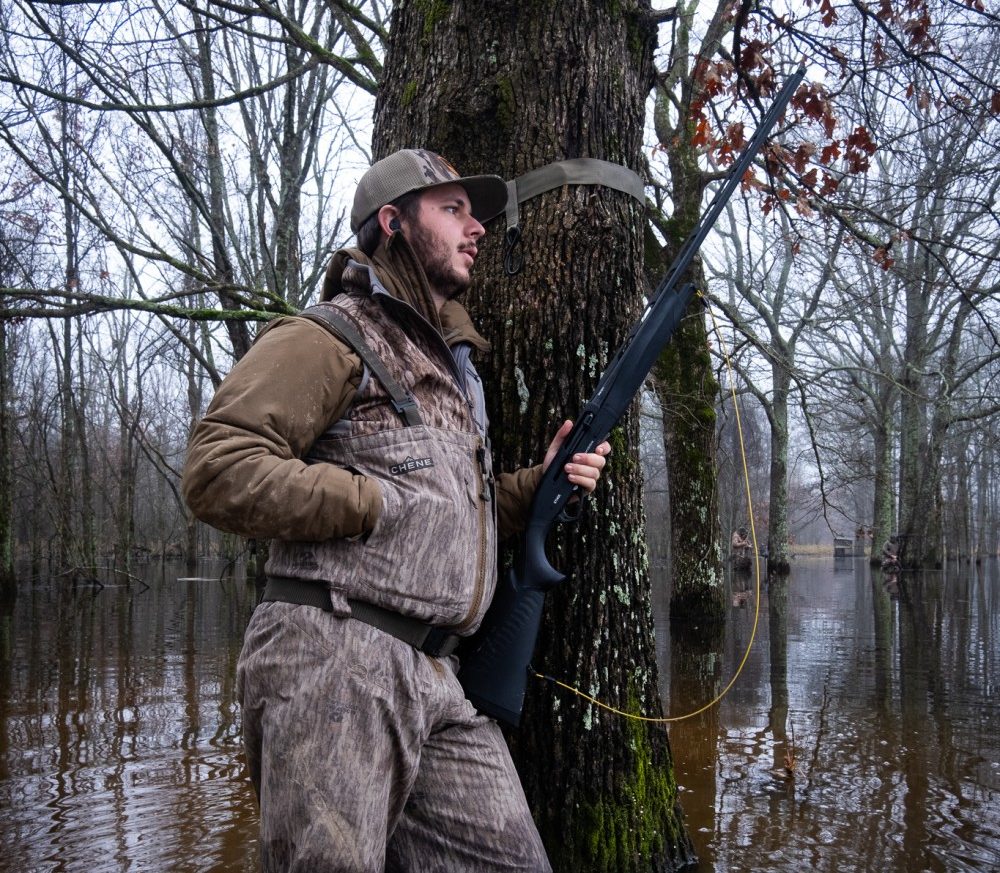

Opening day of duck season is nearly here, and the anticipation is tangible. Duck hunters everywhere are prepping gear, scouting new water, and reviewing their decoy rigs as they count down the days. Come opener, it’s a safe bet you’ll see quite a few motion decoys trying to draw the attention of the first birds of the year. While there are plenty of variations of motion decoys out there, they all have one core job. Create realistic and lifelike movement in a decoy spread to help seal the deal on the birds you’re working. In the early season that especially means juvenile birds born this spring.
These young-of-the-year ducks, as supported by band recovery data, are more than 1.25 to 2.5 times more likely to die each year than adult birds. If you extrapolate that out to hunter harvest, that means over 50% of birds harvested each season are juveniles. That said, a simple spinning wing decoy is not always the answer when hunting early-season ducks. Ducks can wise up fast, so consider these motion decoy Do’s and Don’ts before the season gets underway.
Do: Mix Up Your Motion
While spinning wing decoys are some of the most popular types of motion decoys, several other on-the-water motion decoys have grown in popularity in recent years. One such is the Jahpoo Flyway Deputy motion decoy. These decoys create a bobbing movement on the water, simulating the natural movement of a feeding puddle duck. The decoy provides movement and ripples across the water, adding motion and a level of realism throughout the spread.

Come early season, when conditions and wind are typically much milder than late season, it can be important to run both spinning wing decoys and on-the-water motion decoys. The combination of these two styles of motion decoy can be one of the most effective ways to key birds in on your spread, especially on those flat calm days.

Don’t: Overdo It
When it comes to early season ducks, a common mistake is running too many motion decoys or too many decoys in general. Just like with calling, you can always over do it. In the early season don’t over think your spread.

Even though these birds are less educated than late-season ducks, too much motion can be a bad thing, especially when you are trying to finish birds. Oftentimes, ducks will decoy on or near a motion decoy in a spread. If you have too many motion dekes, birds can have trouble committing to a spot to land. Which can lead to birds flaring or skirting the edge of your kill hole. For early season, a favorite motion setup of ours is running a single spinner with one or two on-the-water motion decoys. If birds aren’t finishing how you want, readjust. In our spreads, the spinners are often the first motion decoys to be pulled, in favor of more subtle realism like with the Flyway Deputy.
Do: Use Muted Color Decoys
Early-season ducks are rarely fully plumed out, which is important to remember when you’re setting the spread. Instead of setting out your late-season fully flocked mallards, opt for more brown ducks in the spread, or even mainly hen decoy sets. Many motion decoys are available in hen models or black, like the Hen Mallard Flyway Deputy. Hen decoys help “match the hatch”, so to speak, of what most ducks look like this time of year. All black models, while not exactly a perfect match, also help add a level of visibility birds can see from far away. Hen decoys and all-black decoys are also versatile later in the season. We all love a good-looking drake mallard, but being able to stand out from a distance, like with all-black, or by adding more depth to your spread, like with hen decoys, is incredibly useful.

If you’re someone who throws mixed species spreads, or someone keying in on a particular species, Jahpoo also offers new species options for their Flyway Deputy. These include Green-Winged Teal and the latest Gadwall Flyway Deputy, in addition to the Mallard drake and hen options.
Don’t: Ignore the Sun
A key part of what makes motion decoys so effective is the reflection off the sun. No matter what type of motion decoy you run, the sun helps your spread pop and makes it visible from much farther away. Because of this, make sure you set your spread in an area the sun will reach. This is especially true come opening day when you’ll likely be competing with other hunters and other motion decoys. If your spread is in the shade while others are in the sun, you’re in for a slow morning compared to the rest of the marsh.
Do: Dial In The Kill Hole & Spread Out Your Motion
Now that we’ve got some motion decoy basics established, it’s time to dig into placement in the spread. There’s a million ways to set a spread; some are tried-and-true, and others are the “on the fly- we got into the spot late” type of setups. Regardless of the situation there are two things to keep in mind when figuring out where to throw your motion.
- In many situations, ducks will land wherever the motion is. Why? Well for the real answer you’d have to ask a duck but in our minds it’s because natural motion makes ducks feel comfortable. With that said, situating your motion decoy or spinner in and around the edge of where you want birds to finish is a sure-fire way to get them to read the script exactly how you want.

- Happy ducks on the water are always moving. Preening feathers, dabbling for food, or just doing hot laps around the water. If you’ve got more than one motion decoy handy, spreading them out across your decoy spread, and out into the edges, can help add to your spreads realism and help commit more birds.
Don’t: Keep Your Motion Running Constantly
Ducks learn surprisingly fast, considering their brain is about the size of a walnut, and the season is long, so there’s no point in over-educating early-season birds. Luckily for hunters, most modern motion decoys come with remotes to turn them on and off, or in some cases have intermittent modes to do this automatically.
Investing in a motion decoy that comes with a remote or buying a remote that works for your decoy ahead of the season is well worth it. Especially if it’s a slow day or you have a shot at calling in a few honkers. The Jahpoo remote for the Flyway Deputy is one of the more advanced remotes we’ve seen hit the market. There are a ton of syncing options available, letting you customize what decoys are running with one another, and it has exceptional range (great out to 30 yards, and we’ve seen tests with remotes working out to 65 yards). Using simple features like a remote can make your hunts run smoother, help keep your batteries alive on long sits and help to not educate early season birds.
Final Word on Early-Season Motion Decoys
Motion decoys are an excellent early-season tool for waterfowl hunters looking to add realism and motion to their spread, but understanding how and when to use them is crucial. The right motion setups can make all the difference in the field. These do’s and don’ts cover some of the most common motion decoy scenarios and can help you use your decoys more effectively this season. For those looking to upgrade their spread for the season ahead, the Jahpoo Flyway Deputy is a great on-the-water decoy option for early season and the colder months to follow.