

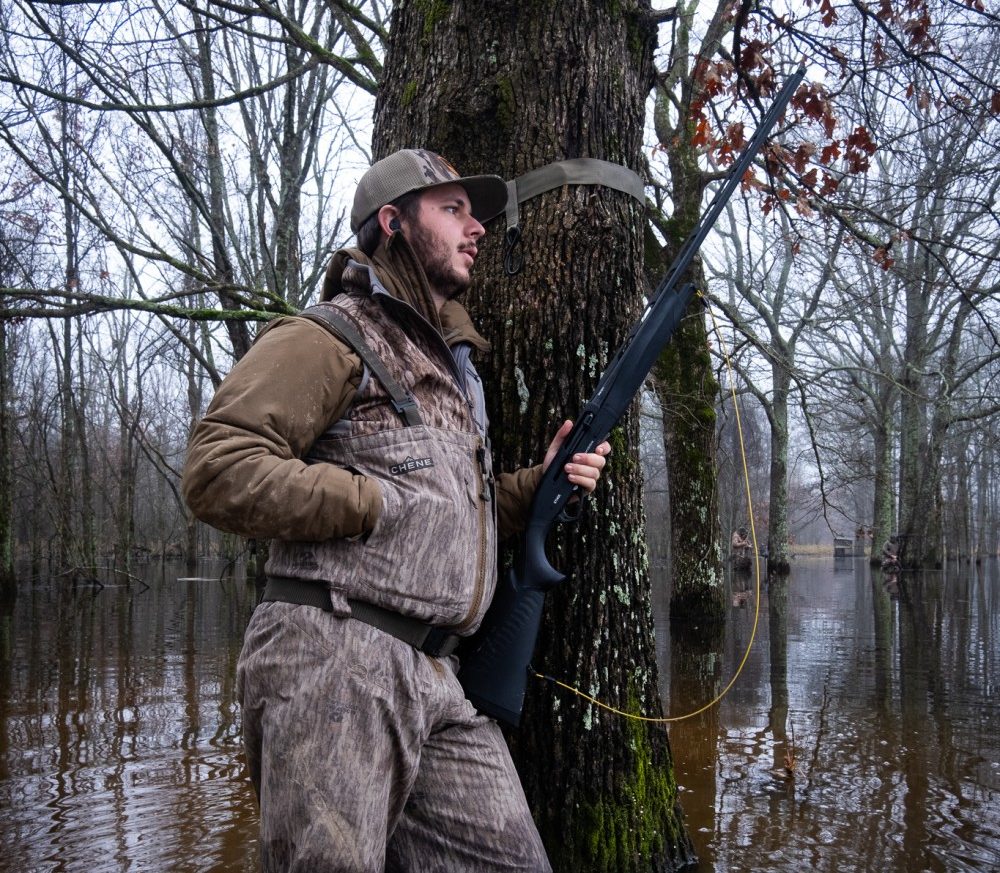

Turkey hunters have no shortage of shotguns to choose from these days. Trusty pump guns, short-barreled turkey guns, and even sub-gauge hammer guns will kill birds at impressive ranges with modern shotshell technology. The tactical turkey trend of pistol grips, short barrels, and red dots has taken spring by storm, and love it or hate it, it’s here to stay. But for those looking for a change of pace, there’s one turkey gun often overlooked, the muzzleloading shotgun.
History of Muzzleloading Shotguns
Since the 1600s, people have been using smooth-bore muzzleloaders capable of firing shot. These early guns relied on flintlock technology, which uses a flint hammer to strike the iron frizzen, creating a spark that ignites black powder in the pan, eventually firing the gun. These smooth-bore shotguns were the choice of bird hunters at the time. Unfortunately, flintlocks were not very reliable. Water and wind often prevented the powder in the pan from igniting, causing misfires.
In the 1820s, that would change with the first percussion cap rifles and shotguns. The percussion cap is a self-contained ignition source for muzzleloaders that eliminates the need for a pan and black powder. It was the first time hunters had reliable muzzleloaders to harvest game. The technology quickly replaced flintlocks, with gunsmiths building intricate side-by-side muzzleloading shotguns. It wasn’t until the late 1850s that the rise of breech-loading shotguns and cartridges would eventually render muzzleloading shotguns obsolete. Nevertheless, there are still a select few who honor tradition and hunt with muzzleloading shotguns.
How to Load a Muzzleloading Shotgun
Today’s muzzleloading shotguns are mostly percussion cap models. While you can find some smoothbore flint locks, their reliability is still questionable, so we’ll focus on the percussion cap offerings. Standard muzzleloading shotgun loads consist of five parts: the powder, the powder card, the cushion wad, the shot, and the overshot card. Start by pouring in the powder, followed by packing down a powder card. The next step is to add a cushion wad. These come in self-lubricated options and dry options, with the former being more common. If you find your patterns create a “donut” shape, cut the cushion wad in half. Oftentimes, this can help negate the donut effect. Next, add your shot atop the cushion wad before packing a light overshot card on top. As its name implies, the overshot card covers your shot, preventing it from rolling out of the barrel.
Patterning a muzzleloading shotgun can be a lengthy process. You’ll want to experiment with different powder charges, wads, and shot loads. A common loading term for muzzleloading shotguns is the square load, which, in simple terms, means using equal parts by volume of powder and shot. However, many get the best patterns using less powder than lead shot. Experiment with your own muzzleloader and try different charges, shot loads, and shot size until you get a pattern you’re happy with.
Modern Muzzleloaders
If you want to try a muzzleloading shotgun this season, your biggest hurdle may be finding one. Currently, there is only one muzzloading shotgun manufacturer to our knowledge, and that is Pederosoli. They make several reproduction side-by-side shotguns, mirroring their original counterparts. A 12-gauge percussion cap model will set you back about $1,600. There are other guns available, but for these, you’ll have to check secondary markets. From time to time, older SxS muzzleloaders will pop up for sale. In addition, Knight Rifles did a limited run of modern turkey muzzleloaders, the TK2000.
Hunting with a Muzzleloading Shotgun
Hunting with a muzzleloading shotgun isn’t the most effective way to harvest a turkey, but it is a fun challenge and a nostalgic experience. Compared to typical turkey hunting, the process is fairly similar. You’ll want to locate a bird, work him with calls, and if all goes well, get a shot at him. The main thing to keep in mind with muzzleloading shotguns is your effective range. Unlike modern turkey guns and TSS, you won’t be able to shoot a bird at 60 yards. Instead, focus on your hide and setup to bring the birds in close.