


An ongoing legal battle has come to a close for the time being, as the 10th Federal Court of Appeals ruled in favor of four elk hunters who corner-crossed in Wyoming in 2021. As part of the larger district federal court rulings, this decision extends to states under the 10th court’s jurisdiction. This includes Wyoming, Colorado, Utah, Oklahoma, Kansas, and New Mexico and could have serious implications for waterfowl hunters in these states.
The issue of corner-crossing arises from public and private land boundaries. These boundaries, often laid out in a checkerboard configuration, have historically been left up to local court interpretation and a lot of confusion. To corner-cross, one must step from one corner of public land to another, without stepping foot on private land.

The case involved four elk hunters who used a ladder to corner-cross land owned by Iron Bar Holdings. Iron Bar had clearly marked its property boundaries with statues and U.S. Geological Survey data. Using ladders, the hunters were able to go up and over the property boundary, never leaving public land.
In court, the argument presented by the ranch was that the hunters devalued their property by millions of dollars as they crossed through their air space. In a local court, the jury found the four hunters innocent of all charges. The ruling was appealed to the 10th District Court, which ruled 3-0 in favor of the hunters. The judges relied heavily on the 1885 Unlawful Inclosures Act, stating “no one may completely prevent or obstruct another from peacefully entering or freely passing over or through public lands.” They went on to add that “a barrier to access, even a civil trespass action, becomes an abatable federal nuisance in the checkerboard when its effect is to inclose public lands by completely preventing access for a lawful purpose.”
Implications for Waterfowl Hunters
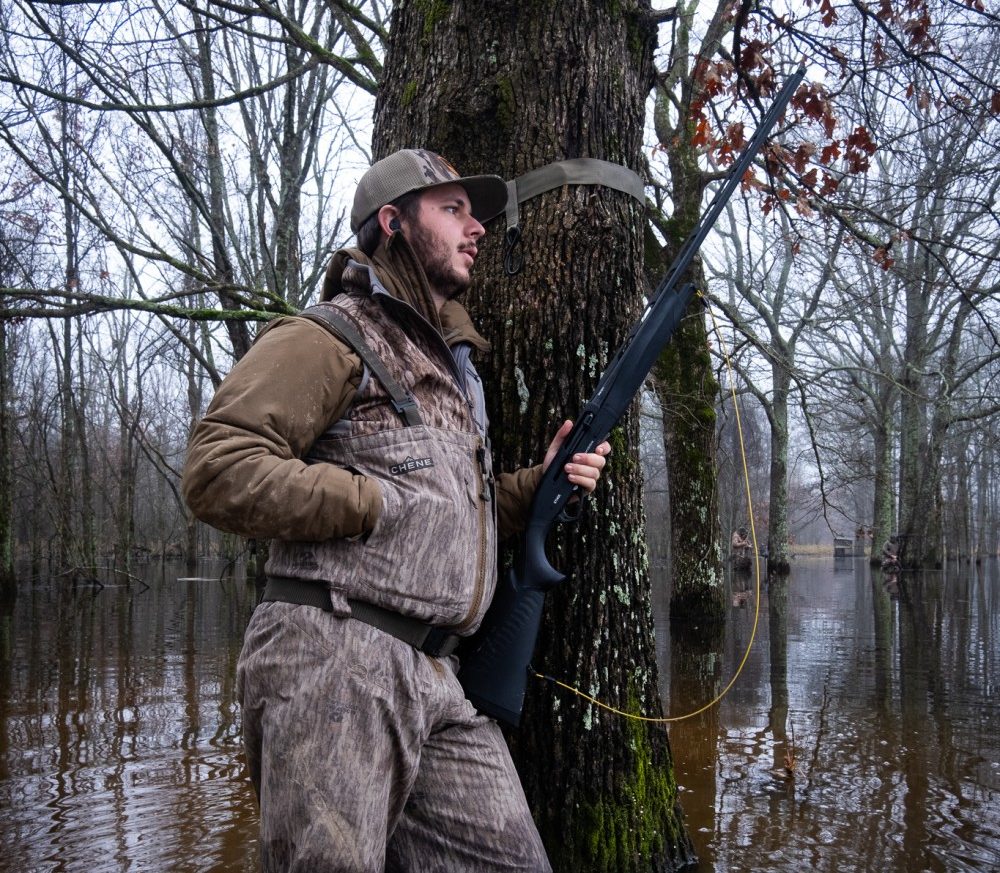
The corner-crossing ruling may have huge ramifications for waterfowl hunters in the West seeking to access landlocked public lands. With that said, there are a few caveats. In the case of the Wyoming elk hunters, clear markers backed by U.S Geological Survey data were present. The hunters knew exactly where to legally cross the corners without trespassing. The rulings from the 10th Circuit Court reflect this, and failure to identify exact crossing points may lead to unintended trespassing.

In addition, mapping services like onX and GoHunt are not exact. While they can get you close to legal boundaries, they may not be exact. This means without distinct markers backed by official survey data, the legality of corner-crossing is still in question. Nonetheless, this case is a big step forward in the legal battle to access landlocked public lands.
Check out other recent waterfowl news below: