

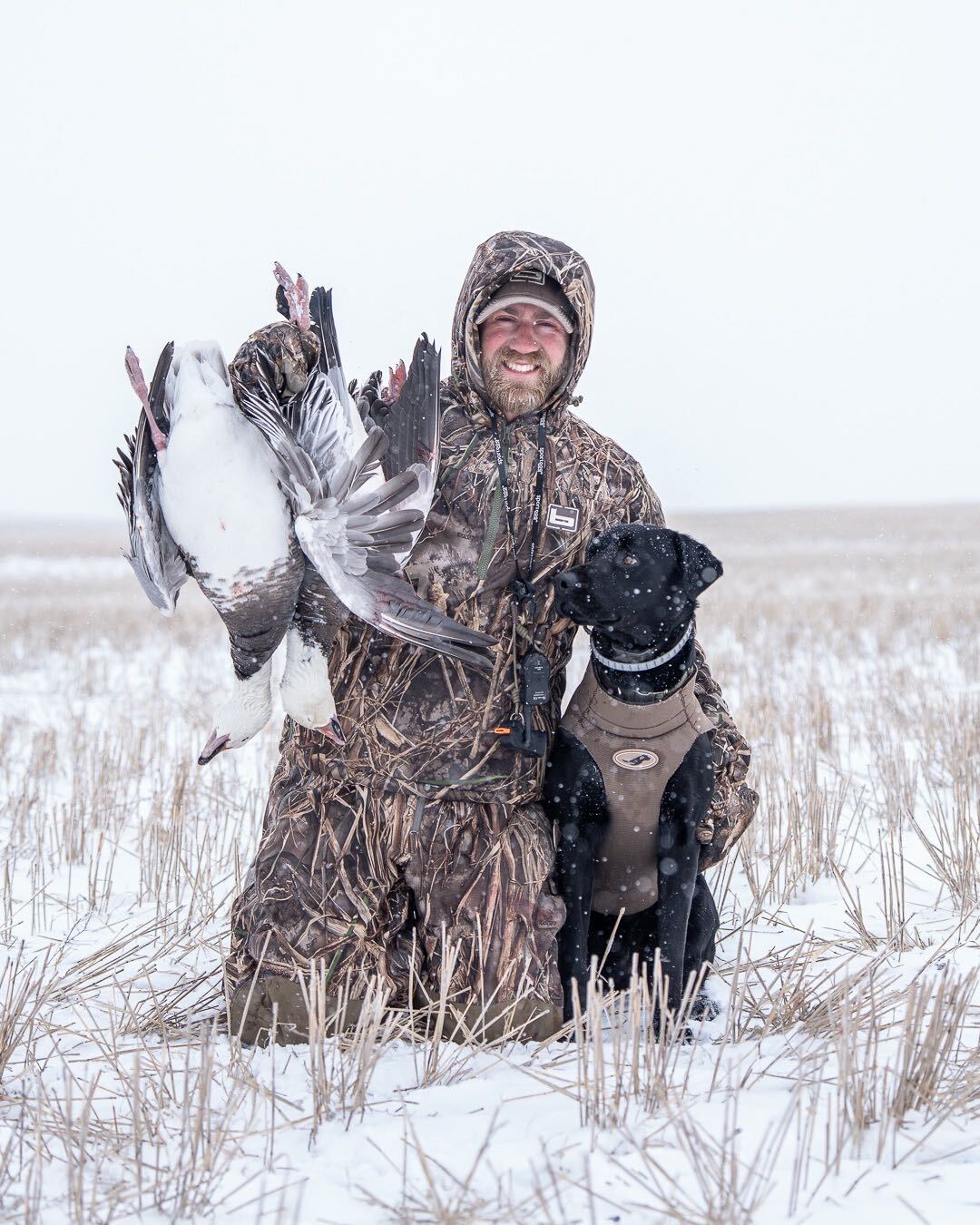

As a lifelong waterfowl hunter, I started my journey at five years old, and at the time I was the designated duck dog. It was the one easy job a little kid could do, and through most of my waterfowl career, I had never owned a retriever. There were certainly days when I wished I had one, but it wasn’t until I started guiding that I decided I needed a retriever of my own. I am by no means a professional trainer, nor do I have the desire to become one, but hopefully the thoughts and ideas of a regular duck hunter like myself can resonate with your future retriever training endeavors.

The Basics
I was waiting on a litter, but after two failed tries, another great option came about, and I ended up getting my current dog, Finn, from Ultimate British Labs out of South Dakota. I knew that I wanted to do as much of his training as I possibly could and build a solid gun dog; that said, I had never trained a dog before. I started off with the Cornerstone Gun Dog Academy (CGA) program, using it for Finn’s basic obedience. This really set the foundation for his hunting career and is arguably the most important part of the process. Without a solid foundation and the respect for commands that come with it, it’s hard to train a good dog. His basic obedience included sit, stay, heel, come, place/kennel, food training, potty training, and SOCIALIZING.
As the name indicates, these are all basic commands, but it’s important not only to get them to understand the commands, but to follow them regardless of the situation or external stimuli present. We did a lot of treat and clicker training as recommended by CGA, keeping everything focused on positive reinforcement. Socialization is an easily overlooked piece of training, but it really helps your pup adapt to different environments and learn how to handle excitement. We played bumper a bit, but we kept retrieving to a minimum to protect his developing joints and to avoid introducing bad habits at such an influential age.

Once his basic obedience was done, around six months of age, we switched over to Freddy King—The Retriever Trainer—and started basic gun dog training. I followed along with the “Teets Life” training progression, which goes week by week and introduces concepts on a “build off each other” approach. We worked on steadiness, building drive, e-collar conditioning, force fetch, single marks, and whistle training. These are all relatively simple concepts, and the key for us was consistency. Even if it was only 15 minutes a day, it was obvious that Finn was understanding the ideas and putting the pieces together. We moved through this process as fast as I felt comfortable with, but we never rushed to the next stage. I kept catching myself wanting to push to the “badass gun dog stuff,” but I knew that the longer we honed in on the basics and made sure he had them mastered, the easier the advanced training would come.
Intermediate Training
After he had a very solid grasp on the basics, we advanced to intermediate gun dog training—still following Freddy King: The Complete Retriever “Teets Life”—where we started working toward the casting stage. Force-to-pile, wagon wheel, T-drill, Double T-drill, and some basic pattern blind ideas were on the docket, along with an advancement in marks: more obstacles, further distances, bigger distractions, and double/triple birds. As most of this training happened in the winter and spring, we didn’t have to worry too much about heat, which allowed us to have longer sessions. These were also more complex concepts, allowing us to extend training to 30–45 minutes as we took time working things over, dialing in the setups, and progressing with a methodical approach. Complex ideas aren’t quite as repetitive, so I found it easier to keep Finn engaged. This stage is really where I had to keep a level head and work on not getting frustrated (which I’ll address later), because each concept is completely new to the dog. Getting them to understand what you’re thinking is challenging, but doable, for a first-time dog trainer.
A couple of key takeaways I found when working on basic and intermediate gun dog training:
- Know when to quit. There is going to be a point where your dog is not understanding you, and you’re getting frustrated. At this point, don’t keep pushing, and don’t get mad at your dog. Some days are great, and some days are brutal. Take the loss and try again tomorrow!
- Remind yourself that every concept is NEW to your dog. They don’t know until you teach them. A great example of this was introducing Finn to an Avery EZ-Bird. He had only ever picked up white Avery Hex bumpers. When running a simple back bumper, he literally ran right over the EZ-Bird—basically stepped on it. I couldn’t believe he hadn’t seen it. Then I realized he had no clue what it was; he was looking for a white bumper, not a fake duck. After showing it to him and tossing it a few times, he never missed it again.
- Remember, it is okay to go backward—and you likely should. If your dog isn’t understanding a concept, identify where the missing link is. More often than not, I found myself trying to take too big of a step. Breaking it down and simplifying the process allowed Finn to build a better understanding of the idea, and it helped him figure out the “why” behind what he was doing.
- Find a buddy or mentor to train with, preferably one with experience. Having a second set of eyes and ideas is a great way to identify areas of weakness, as they often pick up on things you might overlook. It is also extremely helpful to work on marks where the bird originates out in the field. Let’s face it: bumpers thrown from your hip with the dog at heel are great for conditioning and lining work, but they don’t do much to help your dog develop a true mark.
- Stay consistent. This might be the single most important takeaway, and it’s what separates an okay dog from a great dog. Even 10 minutes a day of basic obedience helps. It’s amazing how fast they lose it or revert when you go a couple of days or weeks without training. Simply put: the more time you put in, the more you’ll get out of your dog.
- Find ways to keep it fun, and always end on a good note. Just like with your partner or spouse at home, don’t go to bed in a bad mood. I really noticed how well Finn responded and how much his drive built when we kept things fun and exciting with lots of praise. Dogs don’t like to be yelled at any more than we do. Ending the session on a high note sets the bar for tomorrow and keeps it something your dog looks forward to rather than resents.
Throughout the majority of this basic and intermediate training, Finn did not hunt. I didn’t want to expose him to a situation where excitement would overpower his training, and I wanted to be sure he could handle the adrenaline of a hunt before sitting in a blind. A couple of times I brought him out after the hunt was over to help socialize him to a hunting setup—decoys, blinds, dead birds, etc.—but he didn’t go on his first actual hunt until he was 10 months old and well through most of his intermediate training. In my opinion, steadiness, force fetch, and a firm grasp on single marks are really the three concepts a dog needs to master before going on a controlled hunt and finding success. Remember that hunting introduces sloppy tendencies and behaviors we often overlook in the heat of the moment, and every improper retrieve can reinforce a bad habit.

Advanced Training
Once we reached the advanced gun dog stage—progressing to pattern blinds and eventually cold blinds—I opted to send Finn off for professional training. This was a moment of self-realization: I did not have adequate time or resources to set up pattern blind drills, and to be honest, I didn’t fully understand the explanation of them in the videos I watched. This was probably the best move I could have made. Finn went to Chris Jobman at Flatlander Kennels for a couple of months and came back more impressive than ever. They tightened up a few things, like speed on whistle sits, extending the distance and difficulty of marks, introducing water work and T-drill, and most importantly, pattern blinds (the leading concept to running a cold blind effectively). Pattern blinds can be a repetitive process, but they build confidence and push limits.
My thoughts on professional training vs. DIY are this:
- DIY is far more rewarding because you get to see your pup progress through the stages, but without prior training experience, it is not as efficient as a professional trainer.
- If you have the time to be dedicated and consistent, DIY is an awesome option to progress your dog to whatever stage you feel comfortable with (and save some money). Once you reach your personal training limit, send your dog to a pro.
- Basic obedience is easily done at home. Basic gun dog training is a little trickier, but again, it can be done at home with consistency. Intermediate gun dog training is trickier still, and a lot of people send their dogs off at this stage. I chose not to, simply because I had enough time to train for 30 to 60 minutes each day.
- Your dog will likely progress faster and handle better after going to a professional trainer. The pros know what a dog is going to do before the dog even does it. Chris, for example, is incredibly skilled at reading a dog and picks up subtle cues that only come from training thousands of dogs—cues that the average guy like me completely misses.
- Identify what your training goals and expectations are. Do you want a weekend warrior partner, a guide dog that runs 100 days a season, or a dog that runs hunt tests and field trials? Maybe you don’t care if your dog can run a triple mark, ignore a diversion bird, and run a 200-yard blind. In that case, you probably won’t need a pro-level trainer. Keep in mind: the more advanced you want your dog to be, the more time-intensive and difficult the training becomes.
As I sit here and write this, Finn is spending his summer with Dylan Graves training, running hunt tests, and preparing for the upcoming fall. He finished his first full hunting season with over 2,000 retrieves, capped by an 800-yard mark and a 300-yard blind retrieve—surpassing all expectations I could have had and then some. This summer he went 4-for-4 in seasoned hunt tests and will be working toward his HRCH title next year. The reasoning for sending him back to a pro trainer? Summer heat, my work schedule, and the necessity for him to build even more confidence running complex land and water marks and blind retrieves before another heavy hunting season.

The journey from a puppy stepping over his first EZ Bird to a dog making 800-yard marks in the field hasn’t always been straightforward, but every step was worth it. Balancing DIY work with professional training gave Finn the best of both worlds—and made me a better trainer and handler in the process. As we get ready to kick off another season, I can say with certainty that the time, effort, and investment were beyond worth it. Trust the process, enjoy the small victories along the way, and build the dog that fits your needs.