

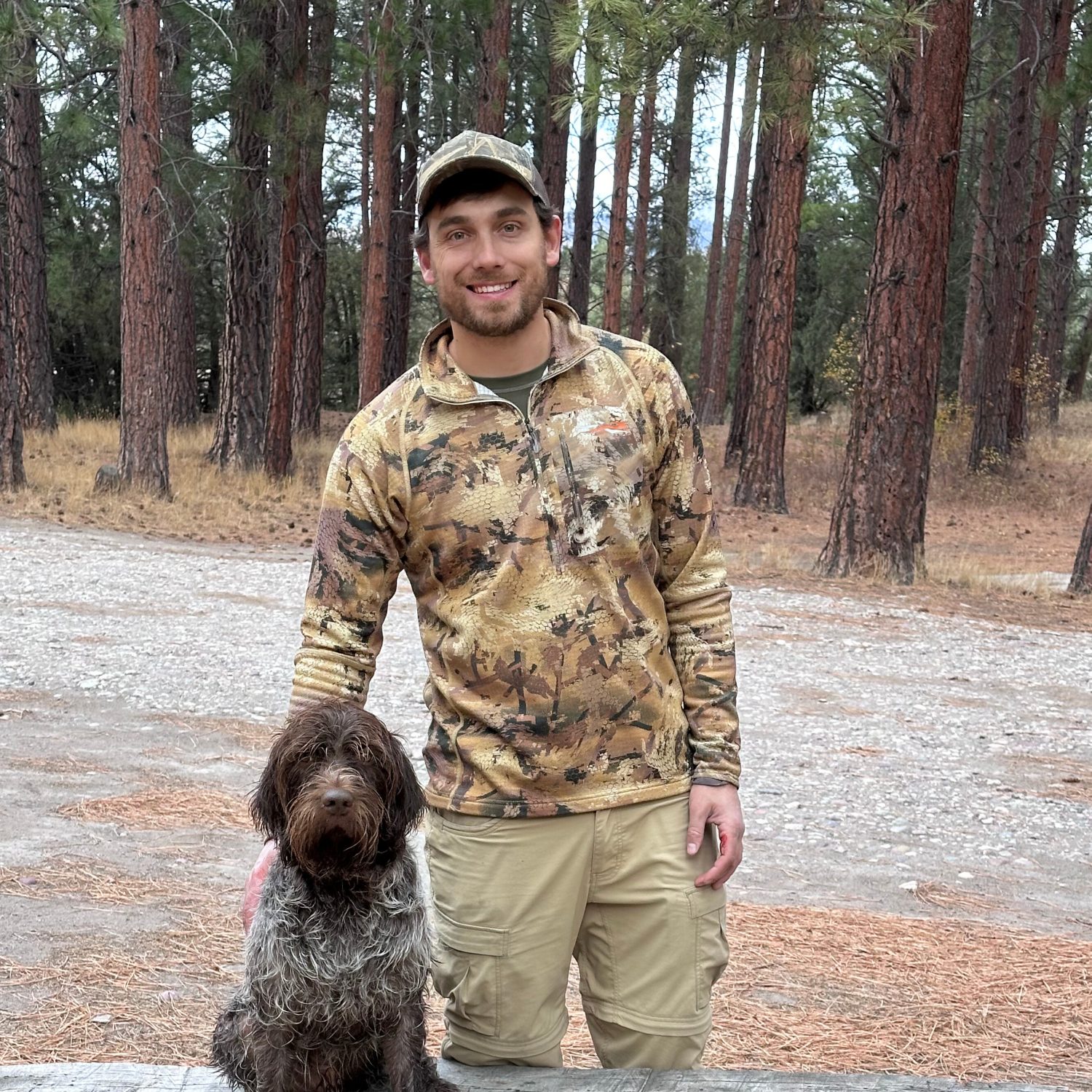

All photos courtesy of IDFG.
While Idaho isn’t widely considered one of the top turkey hunting states, it’s certainly a sleeper option. Wild turkeys aren’t native to the Gem State, but during the mid- to late-1900s, several different species of wild gobblers were introduced here, including Merriam’s, Rio Grande, and Eastern turkeys. They’ve done well, hybridized and can be hunted in a variety of habitats across the state, from the sagebrush of southern Idaho to the temperate rainforests on the border of Canada.
A particular area that’s been doing well, according to Micah Ellstrom, Regional Wildlife Manager for the Idaho Department of Fish & Game (IDFG), is the Panhandle, which is the northernmost portion of the state. In fact, the population is thriving so much there that it’s prompted Ellstrom and his colleagues to conduct further research.
“There is a lot of talk about turkey populations around the nation right now, with a lot of areas experiencing population declines, and there are some questions as to why,” he says. “It seemed our populations in North Idaho are robust and doing pretty well. We wanted to look at get a better understanding of survival rates, habitat use, and nesting ecology.”
For the past several winters, Ellstrom and his team have been trapping wild turkeys and fitting adult hens with GPS backpack transmitters. They also band any toms and juvenile turkeys they catch. This year marks the third in the pioneering turkey research effort.
One thing that the scientists have been focusing on is nesting behavior. First, they use GPS data to identify incubation periods and the locations of nests. Once the hen leaves the nest, more work ensues.

“We hike in to look at the nest site,” says Ellstrom. “Then we can see if it was a successful hatch, or if the nest failed or was depredated. We can count clutch sizes, measure vegetation, and assess key habitat factors.”
Meanwhile, the leg-banded birds help IGFD staff with turkey mortality and hunter-harvest rate estimates. While the research is still in process and has not led to any definitive findings, Ellstrom says that they have already gathered some cool takeaways, one of which is that hens whose first nests fail have appeared to be quite successful during their second attempts later in the spring.

Additionally, they’ve seen that North Idaho turkeys often nest near human infrastructure, such as roads and trails, likely because of predator avoidance. Similarly, their nests often have high degrees of visual obstruction to protect them from nest raiders. Identifying and conserving key nesting and roosting sites is an important tool in Ellstrom’s toolbox to help foster healthy turkey populations in the Panhandle going forward.
He adds that the reasons that turkeys are doing well there are closely tied to the overall good nesting habitat quality. “We have a lot of early-successional forests that have been relatively recently logged,” he says. “They’re brushy and in the initial stages of regrowth, which seems to provide good nesting cover. The other thing is that we just don’t have the full suite of nest predators that other states do.”