



Every hunter has a trusty cast iron skillet, just like every angler has a grease-stained deep fryer. Some things just go hand in hand. But where does the wok fit into the equation for waterfowlers?
I’m the kind of guy who is inherently skeptical of any new kitchen appliance fad. Usually, whatever the latest culinary gizmo claims it can do, I can already achieve with the tools in my cupboard. Slap Chops, George Foreman Grills, Instant Pots, Air Fryers—what will they think of next?
I’m here to tell you that a wok is a different beast. They have been in use for thousands of years, literally. The wok was invented in China, with the earliest versions appearing during the Han Dynasty, dating back to around 200 BC. Take that, George.

To understand a wok’s utility, you have to understand how it actually works. The deep basin and sloping high walls create distinct temperature zones. The very bottom gets exceptionally hot, capable of reaching temperatures that would warp a cheap skillet. This is where the intense searing happens (what chefs call wok hei, or “the breath of the wok”). Meanwhile, those tall sides offer a cooler ambient zone. You can sear strips of meat in the center, then push them to the sides to stay warm while you stir-fry your vegetables in the residual fat.
So, what can you actually do with it? Turns out, it’s essentially the Swiss Army knife of pans. It’s not just a stir-fryer; it’s a deep fryer, a steamer, a smoker, and a stew pot all rolled into one piece of carbon steel.
Carbon Steel Wok
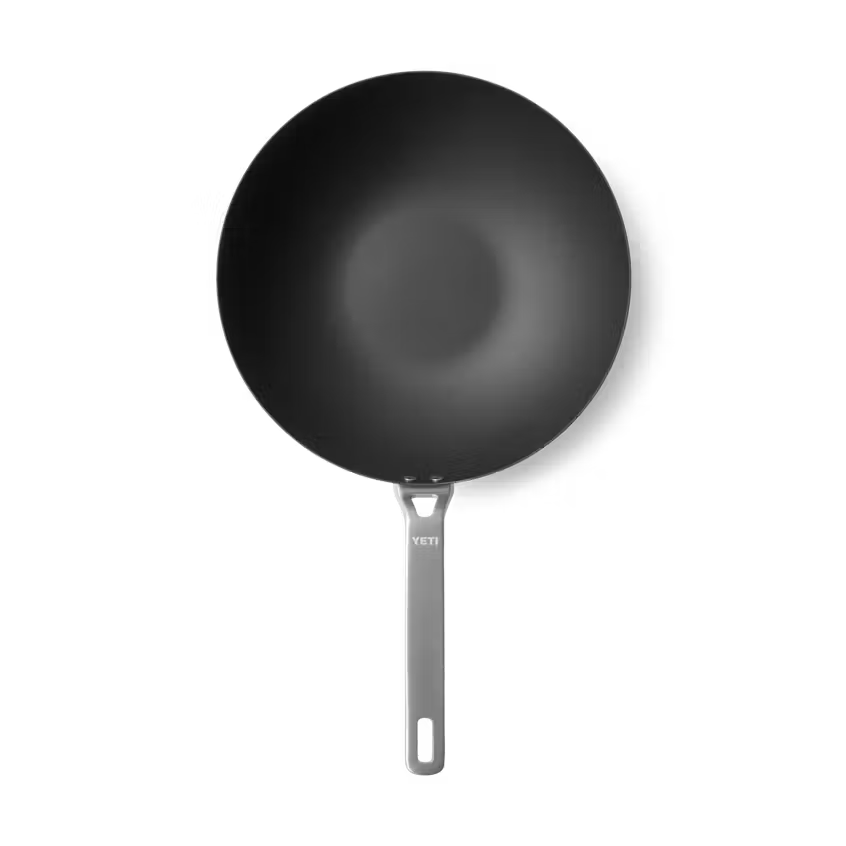
- Stir-Frying: This is the bread and butter of the wok. Slice your goose or duck breasts thin, get the wok smoking hot, and toss them in for 30-60 seconds. They sear hard on the outside while staying tender and rare inside. Accompany with some fried vegetables and rice.
- Deep-Frying: Think you need a massive Dutch oven to deep-fry? Because of the wok’s conical shape, you can achieve a deep pool of hot oil using about half the volume you’d need in a flat skillet. Plus, the high, sloping walls catch the splatter, which means less mess.
- Steaming: This might sound a little frou-frou for duck camp, but hear me out. Drop a bamboo steamer basket over an inch of boiling water in the belly of the wok. Suddenly, you’re steaming tamales, dumplings, and potstickers. It’s also great for reheating leftovers without drying them out.
- Indoor Smoking: Line the bottom of the wok with heavy-duty foil, toss in a handful of wood chips (or tea leaves if you want to get traditional), place a wire rack over the top, and cover it with a lid. This method imparts a smoky flavor to a couple of duck breasts (or legs/thighs prior to braising) in a matter of minutes.
- Braising & Soups: Sear some tough duck legs/thighs, deglaze the pan, pour in broth, vegetables, and aromatics, then let everything simmer low and slow. Cover with a lid to prevent reduction; leave it off to concentrate the flavors.
Now that you’ve got the basics, here are a few recipes where having a wok will make your life a lot easier.
Owning a wok is not the end-all, be-all. If your culinary repertoire begins and ends with wrapping a chunk of breast-meat in bacon, you’ll survive just fine without one. But if you actually like to cook—if you want to sear hot and fast, fry without a big mess, or gently steam, all in one pan—it’s time to make some room on the stovetop. Unlike that Slap Chop taking up space in your cabinet, this is one tool that won’t be collecting dust anytime soon.
Until next time, enjoy—and good luck out there!
Article by Split Reed Food Editor Kirk Marks, a hunter, photographer, and culinary aficionado based in Kent Island, Maryland. Give him a follow at @kirkymarks.